
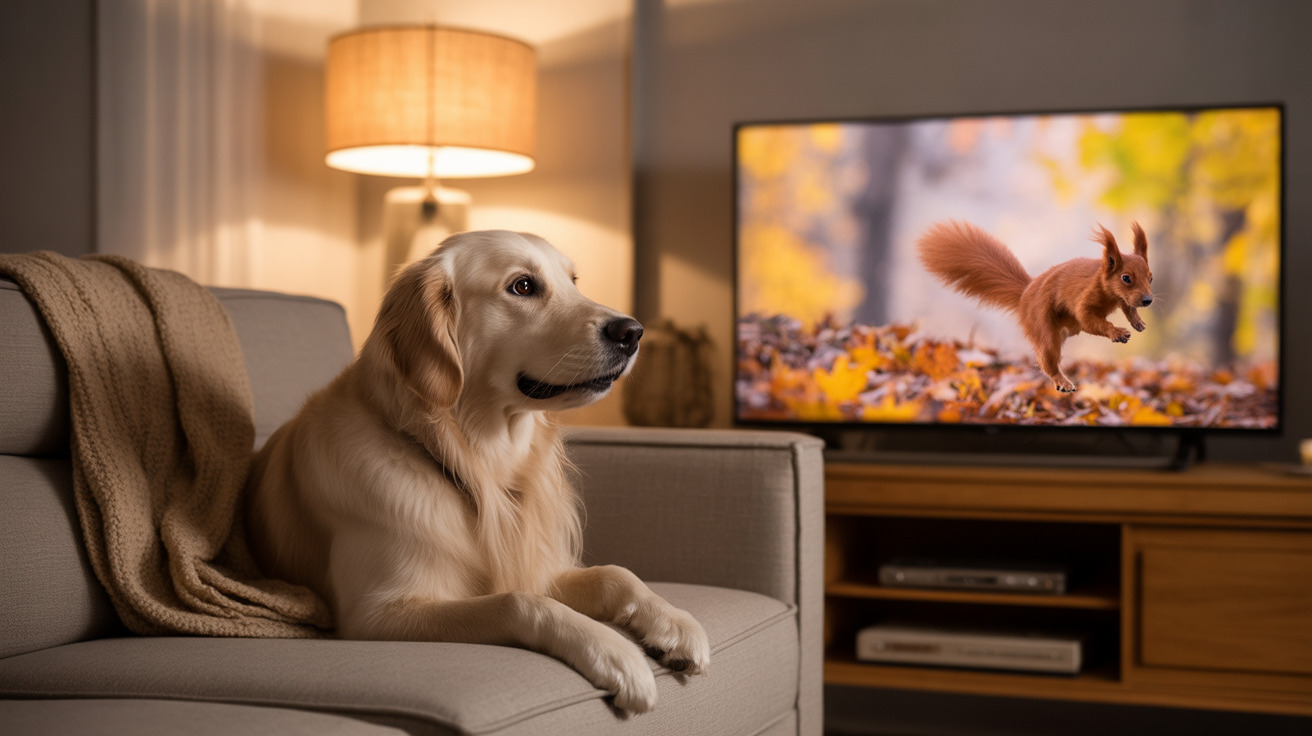
Understanding Canine Visual Perception TV
Dogs experience television differently than humans due to their unique visual capabilities. While humans see television as smooth motion at standard frame rates, dogs require higher refresh rates to perceive fluid movement on screen. Modern TVs with enhanced refresh rates provide a more engaging experience for dogs watching TV, making the content appear more realistic and captivating.
The canine visual system processes colors differently than human vision, seeing primarily in blues and yellows rather than the full spectrum humans enjoy. This difference in color perception influences what content appeals most to dogs and explains why certain shows may capture their attention more effectively than others.
Best TV Content for Dogs: What Captures Their Attention
Research into the best TV content for dogs reveals that nature programming, particularly content featuring other animals, tends to generate the strongest responses. Movement-heavy scenes with birds, squirrels, or other dogs often trigger the most engagement, while static images or human-focused content may hold less appeal.
Programs designed specifically for canine audiences, such as specialized pet programming, incorporate these preferences by featuring content with appropriate pacing, colors, and subjects that align with natural dog interests. These shows often include sounds and movements that tap into dogs' hunting and social instincts.
Dogs Personality TV Watching: Individual Differences Matter
Just like humans, dogs demonstrate individual preferences when it comes to television viewing. Some dogs show intense focus and may even try to interact with on-screen animals, while others remain completely disinterested. Breed, age, and personality traits all influence how much time dogs watch TV and what type of content holds their attention.
Herding breeds, for example, may show heightened interest in programs featuring moving animals, as this aligns with their natural instincts. Conversely, more laid-back breeds might prefer ambient nature sounds or calmer visual content.
Managing Excitable Dogs TV Reactions and Anxious Dogs TV Sounds
While television can provide enrichment, pet owners should be mindful of how their dogs respond to different audio elements. Excitable dogs TV reactions can include barking, jumping, or attempting to chase on-screen animals, which may not be ideal in all living situations.
For anxious dogs TV sounds like doorbells, sirens, or sudden loud noises can trigger stress responses. Pet owners should monitor their dogs' reactions and adjust volume levels or content choices accordingly to ensure the viewing experience remains positive and calming rather than overstimulating.
Pet TV Enrichment: Using Television as Mental Stimulation
When used appropriately, television can serve as valuable pet TV enrichment, particularly for dogs who spend extended periods alone. The visual and auditory stimulation can help prevent boredom and provide mental engagement during quiet hours.
However, television should complement, not replace, physical exercise, training, and social interaction. The most effective enrichment programs combine screen time with other activities to create a well-rounded daily routine for your dog.
Frequently Asked Questions
Do dogs actually watch TV, and how much time do they spend on it daily?
Dogs do watch TV, though their engagement varies significantly by individual. Most dogs will glance at screens occasionally throughout the day, with some showing sustained interest for several minutes at a time. There's no established recommended daily viewing time for dogs, as needs vary based on personality and lifestyle.
What kind of TV content do dogs prefer, like animals or cartoons?
Dogs typically prefer content featuring real animals, especially those with natural movements and sounds. Wildlife documentaries, nature programs, and shows featuring other dogs tend to generate the strongest responses. Animated content may be less engaging due to unrealistic movement patterns and colors.
Why do some dogs react strongly to TV sounds like doorbells or horns?
Dogs react strongly to familiar sounds because they associate these audio cues with real-world experiences. A doorbell on TV triggers the same response as an actual visitor, while sirens or horns may activate their alertness instincts. This demonstrates that dogs are processing and responding to television audio as if it were happening in their environment.
How can I choose the right TV shows for my anxious or excitable dog?
For anxious dogs, choose content with calm nature scenes, soft music, and minimal sudden sounds or movements. Excitable dogs may benefit from shorter viewing sessions with less stimulating content. Monitor your dog's body language and behavior to determine what works best for their temperament and adjust accordingly.




