
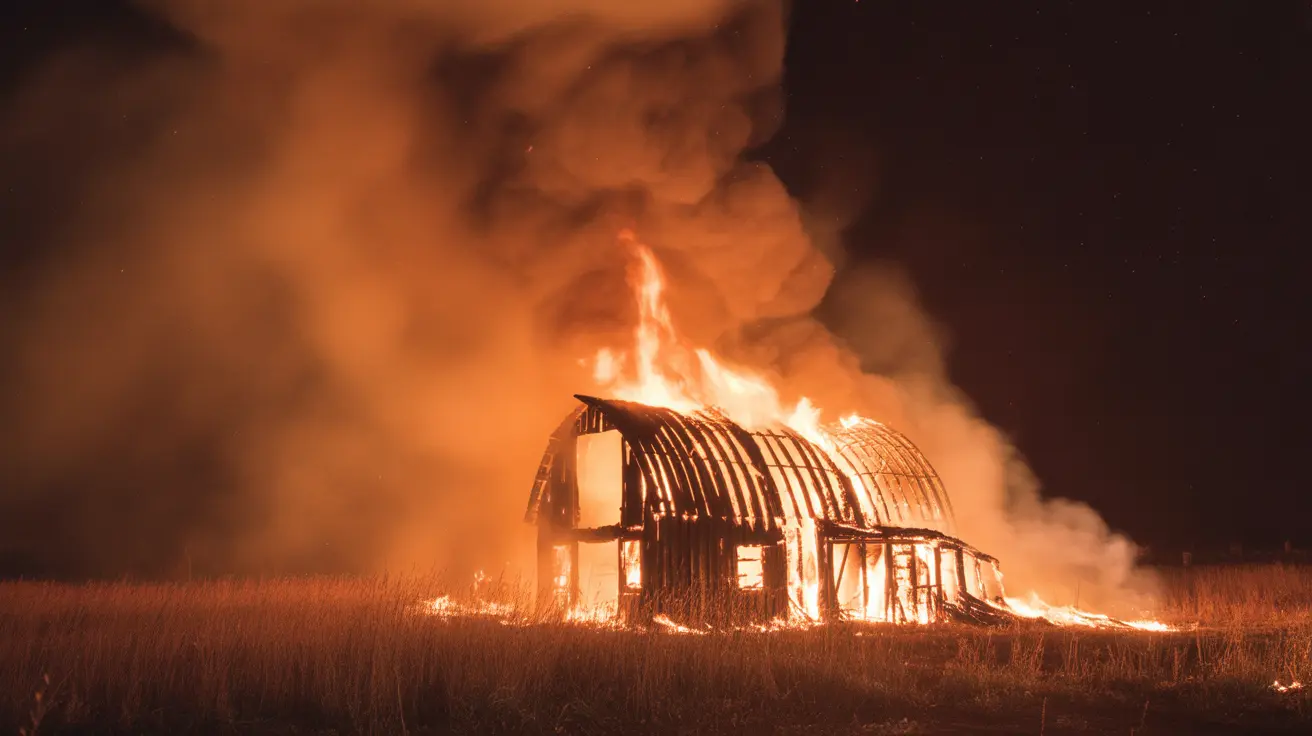
A devastating barn fire in Aurelius, New York, has claimed the lives of over 70 animals, highlighting the ongoing risks that rural farming operations face across Cayuga County. New York State Police confirmed that all animals housed in the barn perished during the blaze, which occurred around 9 p.m. on Monday, April 13.
This tragic incident underscores the critical importance of barn fire prevention measures and the devastating impact such disasters can have on farming communities. For pet owners and livestock caretakers, understanding fire safety protocols becomes essential for protecting animals under their care.
Understanding the Risks of Rural Barn Fires
Barn fires represent one of the most serious threats to livestock and farm animals. The Aurelius barn fire serves as a sobering reminder of how quickly these structures can become engulfed in flames, often leaving little time for animal evacuation. Agricultural buildings, particularly those housing hay, feed, and bedding materials, create environments where fires can spread rapidly.
The close quarters in which farm animals are housed during barn fires makes evacuation extremely challenging. Unlike household pets that may have multiple escape routes, livestock in barns often depend entirely on human intervention for their safety during emergencies.
Common Causes of Barn Fires on Dairy Farms
While the specific cause of the Cayuga County barn fire has not been disclosed, farm fires typically stem from several common sources. Electrical faults barn fire incidents occur when outdated wiring, overloaded circuits, or damaged electrical equipment spark blazes. Many older agricultural buildings lack modern electrical safety features, increasing vulnerability.
Preventing hay ignition barn fires requires careful attention to moisture content and storage conditions. Spontaneous combustion can occur when hay is stored with excessive moisture, creating internal heat that eventually ignites. Heat-producing equipment, including heaters and heat lamps used for animal comfort, also pose significant fire risks when not properly maintained or positioned.
Critical Barn Fire Safety Tips for Animal Protection
Implementing comprehensive fire prevention strategies can mean the difference between minor property damage and catastrophic livestock loss. Regular electrical inspections help identify potential hazards before they become dangerous. Installing smoke detectors and fire alarm systems provides early warning that can save both human and animal lives.
Creating and practicing evacuation plans ensures that all farm workers know how to quickly and safely remove animals during emergencies. Multiple exit routes should be maintained and kept clear of obstructions. Emergency lighting systems can guide both humans and animals to safety during nighttime incidents.
Proper storage of flammable materials away from animal housing areas reduces fire spread potential. Feed, bedding, and hay should be stored in separate structures when possible, with adequate space between storage areas and animal barns.
Rural Barn Fire Response and Recovery
When barn fires occur in rural areas like Aurelius, response times can be extended due to distance from fire stations. This reality makes prevention even more critical for protecting farm animals. Local fire departments often face additional challenges accessing remote farm properties and securing adequate water supplies for firefighting efforts.
The emotional and financial toll on farming families extends far beyond immediate property loss. Livestock represents not only economic investment but often generational farming heritage. Recovery involves replacing animals, rebuilding structures, and managing the psychological impact of losing animals under such tragic circumstances.
Frequently Asked Questions
What caused the barn fire in Aurelius, New York that killed over 70 animals?
The specific cause of the April 13 barn fire in Aurelius has not been disclosed by authorities. Barn fires typically result from electrical faults, spontaneous hay combustion, heating equipment malfunctions, or other heat sources coming into contact with flammable materials.
How can farmers prevent barn fires to protect livestock like cows and calves?
Farmers can implement multiple prevention strategies including regular electrical system inspections, proper hay storage with appropriate moisture levels, maintaining heating equipment, installing fire detection systems, and creating clear evacuation plans. Keeping flammable materials separated from animal housing areas also reduces risk.
What are the most common causes of barn fires on dairy farms in New York?
The leading causes include electrical system failures, spontaneous combustion of improperly stored hay or feed, malfunctioning heating equipment, and human error such as improper disposal of smoking materials. Older farm buildings with outdated electrical systems face elevated risks.
What should you do immediately if a barn fire starts with animals inside?
Immediately call 911, then focus on evacuating animals if it can be done safely. Move animals to predetermined safe areas away from the fire. Never risk human life attempting animal rescue if conditions are too dangerous. Having practiced evacuation plans significantly improves outcomes.
How do New York farmers recover financially after losing livestock in a barn fire?
Recovery typically involves insurance claims for livestock and property losses, potential disaster relief programs, community support, and gradual rebuilding of animal populations. Many farmers maintain specific livestock insurance policies to help cover replacement costs and business interruption losses.




