
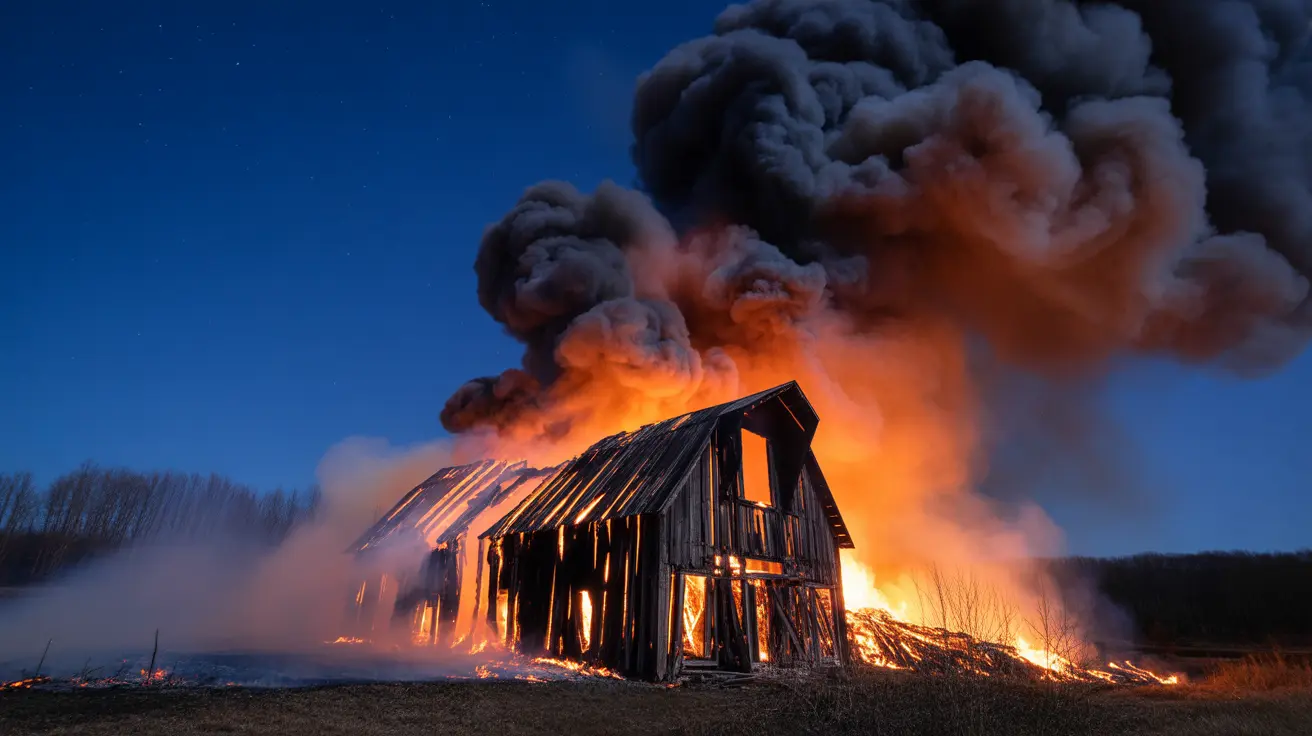
A devastating barn fire in the Town of Aurelius, New York, has claimed the lives of over 70 animals, serving as a stark reminder of the critical importance of barn fire prevention measures for livestock owners. New York State Police confirmed that all animals perished in the blaze that occurred around 9 p.m. on April 13 in Cayuga County.
This tragic incident highlights the urgent need for comprehensive farm fire safety protocols and livestock fire protection systems. For pet owners and livestock farmers, understanding how to prevent barn fires can mean the difference between life and death for beloved animals who depend on us for their safety and protection.
Barn fires spread with devastating speed, often leaving little time for animal evacuation. The Aurelius fire serves as a sobering example of how quickly disaster can strike, making proactive prevention measures absolutely essential for anyone housing animals in agricultural structures.
Understanding Barn Fire Causes
Most barn fires result from preventable causes. Electrical malfunctions top the list, often stemming from outdated wiring, overloaded circuits, or improper installation of heating equipment. Heat lamps, power tools, and charging equipment pose particular risks when not properly maintained or positioned.
Hay storage fire prevention is another critical concern. Improperly cured or stored hay can spontaneously combust, especially when moisture levels exceed safe limits. Green hay or hay stored before reaching appropriate dryness levels generates heat through bacterial action, potentially reaching ignition temperatures.
Other common agricultural fire hazards include smoking materials, mechanical equipment, heating systems, and chemical storage issues. Lightning strikes also pose significant risks to rural structures, particularly those lacking proper protection systems.
Essential Farm Fire Safety Measures
Implementing electrical safety in barns requires regular professional inspections and immediate repairs of any damaged components. Install ground fault circuit interrupters (GFCIs) in all wet locations, ensure proper grounding of all electrical systems, and maintain adequate clearances around electrical panels and equipment.
Proper storage techniques significantly reduce fire risks. Store hay only when moisture content falls below 20 percent, provide adequate ventilation in storage areas, and maintain separation between hay storage and electrical equipment or heat sources.
Livestock Farm Safety Infrastructure
Modern barn fire detection systems provide early warning capabilities that can save lives. Install smoke and heat detectors throughout barn structures, ensuring they connect to monitoring systems that alert you immediately, even when away from the property.
Barn fire sprinkler systems represent the gold standard in livestock fire protection. While requiring significant investment, these systems can suppress fires in their early stages, potentially saving animal lives and property. Automatic sprinkler systems designed for agricultural use account for the unique challenges of barn environments.
Develop comprehensive farm animal evacuation plans that account for different species and their specific needs. Practice evacuation procedures regularly, ensure multiple exit routes remain clear and accessible, and maintain updated emergency contact lists for local fire departments familiar with livestock operations.
Rural Fire Safety Tips for Daily Operations
Regular maintenance prevents most barn fires. Inspect electrical systems monthly, clean dust and debris from equipment regularly, and ensure heating devices maintain proper clearances from combustible materials. Keep fire extinguishers rated for various fire types readily accessible throughout barn areas.
Consider farm fire insurance specifically designed for agricultural operations. Standard homeowner's policies often inadequately cover livestock losses and specialized farm structures. Work with insurance agents familiar with agricultural risks to ensure appropriate coverage levels.
Understanding agricultural fire codes helps ensure compliance with safety standards. Many areas have specific requirements for barn construction, electrical installations, and fire suppression systems. Regular code compliance reviews can identify potential improvements before disasters occur.
Frequently Asked Questions
How can I protect my farm animals from barn fires?
Install proper fire detection and suppression systems, maintain electrical equipment regularly, store hay properly with moisture content below 20%, and develop practiced evacuation plans. Regular professional inspections of electrical systems and heating equipment significantly reduce fire risks.
What are the most common causes of barn fires on farms?
Electrical malfunctions lead barn fire causes, followed by spontaneous combustion of improperly stored hay, heating equipment failures, and lightning strikes. Poor maintenance practices and inadequate safety systems contribute to many preventable fires.
What should I do if my barn catches fire to save my animals?
Immediately call emergency services, then focus on safe animal evacuation if possible without endangering human life. Never enter smoke-filled structures. Pre-planned evacuation routes and practiced procedures provide the best chance for successful animal rescue during emergencies.
Taking Action for Animal Safety
The Cayuga County tragedy reminds us that barn fire prevention requires ongoing vigilance and investment in proper safety systems. Every livestock owner and pet housing operation must prioritize fire safety measures before disaster strikes.
Regular safety assessments, professional consultations, and systematic implementation of prevention measures can help ensure that our animal companions remain protected from the devastating effects of barn fires.




