
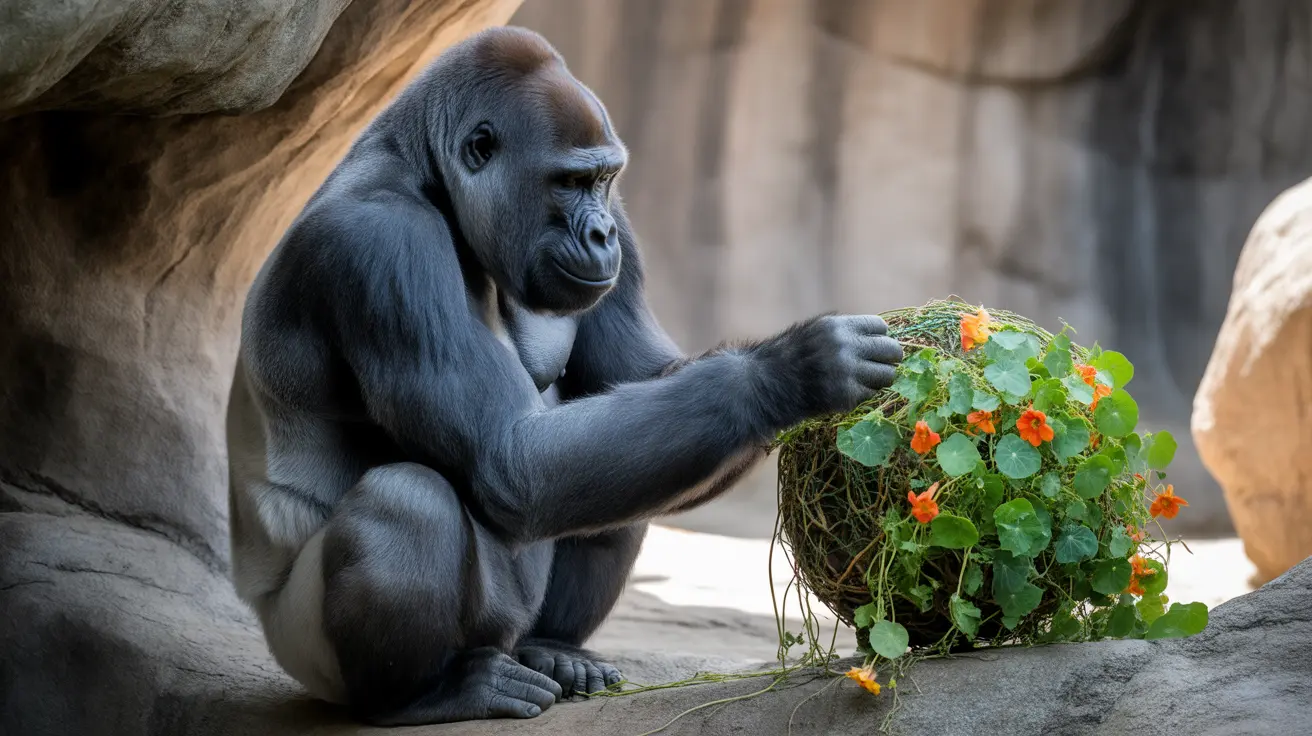
A creative partnership between the Gardner Museum and Franklin Park Zoo has brought an unexpected treat to some of Boston's most beloved zoo residents. Instead of composting the beautiful nasturtium flowers from the museum's central garden display, these colorful blooms found their way into the hands—and mouths—of gorillas and lemurs as part of an innovative animal enrichment with edible plants program.
This heartwarming collaboration represents more than just a simple donation; it showcases how cultural institutions and wildlife facilities can work together to enhance animal welfare while reducing waste. The nasturtiums, which would have otherwise been discarded after their display period ended, provided both nutritional benefits and behavioral stimulation for the zoo's primate residents.
Gorilla Foraging Enrichment Through Natural Plant Materials
Gorillas in the wild spend significant portions of their day foraging for various plant materials, including flowers, leaves, and fruits. The introduction of nasturtium flowers as part of gorilla foraging enrichment helps recreate these natural behaviors in captivity. These vibrant orange and yellow blooms offer not only visual appeal but also provide sensory stimulation through their unique peppery taste and varied textures.
The flowers encourage natural foraging behaviors, allowing gorillas to examine, smell, and selectively consume different parts of the plants. This type of enrichment is crucial for maintaining psychological well-being in captive primates, as it mimics the decision-making processes they would experience in their natural habitats.
Lemur Dietary Enrichment and Behavioral Benefits
Lemurs, with their diverse natural diets that include flowers, fruits, and various plant materials, particularly benefit from lemur dietary enrichment programs that introduce novel food items. The nasturtium flowers provide both nutritional variety and mental stimulation for these intelligent primates.
The introduction of new edible plants encourages natural investigative behaviors, allowing lemurs to use their keen sense of smell and nimble fingers to explore the flowers. This type of enrichment helps prevent boredom and promotes species-appropriate behaviors that contribute to overall animal welfare.
Nasturtium Flowers Nutritional Benefits for Zoo Animals
Nasturtiums are not only safe for primate consumption but also offer several nasturtium flowers nutritional benefits. These edible flowers contain vitamin C, which supports immune system function, and various antioxidants that contribute to overall health. The flowers also provide natural variety in taste and texture, which is important for maintaining interest in food and promoting natural feeding behaviors.
Beyond their nutritional value, nasturtiums offer enrichment through their strong, distinctive scent and bright colors, which stimulate the senses and encourage exploration. This multi-sensory experience is particularly valuable for captive animals who may have limited opportunities for environmental variety.
Zoo Waste Reduction Programs and Sustainable Practices
This collaboration exemplifies effective zoo waste reduction programs that benefit both institutions and animals. By redirecting the museum's flower waste to the zoo, both organizations demonstrate environmental responsibility while enhancing animal care. This type of partnership creates a sustainable cycle where materials that would typically be discarded find new purpose in animal enrichment.
Such initiatives highlight how zoos are increasingly embracing sustainable zoo practices that reduce environmental impact while improving animal welfare. These programs often involve partnerships with local businesses, restaurants, and cultural institutions to source appropriate enrichment materials that would otherwise be wasted.
Urban Zoo Sustainability Initiatives and Community Partnerships
The Gardner Museum-Franklin Park Zoo partnership represents a growing trend in urban zoo sustainability initiatives that leverage community resources for animal welfare. These collaborations demonstrate how cultural institutions and zoos can work together to create innovative solutions that benefit animals, reduce waste, and strengthen community connections.
Such partnerships often lead to ongoing relationships that provide consistent enrichment opportunities while educating the public about both animal welfare and environmental sustainability. They showcase how creative thinking can transform waste into valuable resources for animal care.
Frequently Asked Questions
Are nasturtium flowers safe for all zoo animals?
While nasturtiums are safe for many animals, including primates, each species has specific dietary requirements and restrictions. Zoo nutritionists and veterinarians carefully evaluate all potential food items before introducing them to ensure they meet safety and nutritional standards for each species.
How do enrichment programs benefit captive animals?
Enrichment programs provide mental stimulation, encourage natural behaviors, and help prevent boredom in captive animals. By offering variety in food, scents, textures, and activities, these programs promote psychological well-being and contribute to overall animal health and happiness.
Can pet owners safely give nasturtiums to their animals?
While nasturtiums are generally safe for many animals, pet owners should always consult with their veterinarian before introducing any new foods to their pets' diets. What's safe for zoo animals under professional supervision may not be appropriate for all domestic pets without proper guidance.
Conclusion
The partnership between the Gardner Museum and Franklin Park Zoo demonstrates the power of creative collaboration in enhancing animal welfare while promoting sustainability. By transforming what would have been garden waste into valuable enrichment materials, this initiative benefits animals, reduces environmental impact, and strengthens community connections.
As zoos continue to prioritize both animal welfare and environmental responsibility, partnerships like this one serve as inspiring examples of how institutions can work together to create positive outcomes for animals and communities alike. These innovative approaches to enrichment and sustainability help ensure that zoo animals receive the best possible care while teaching valuable lessons about environmental stewardship.




