
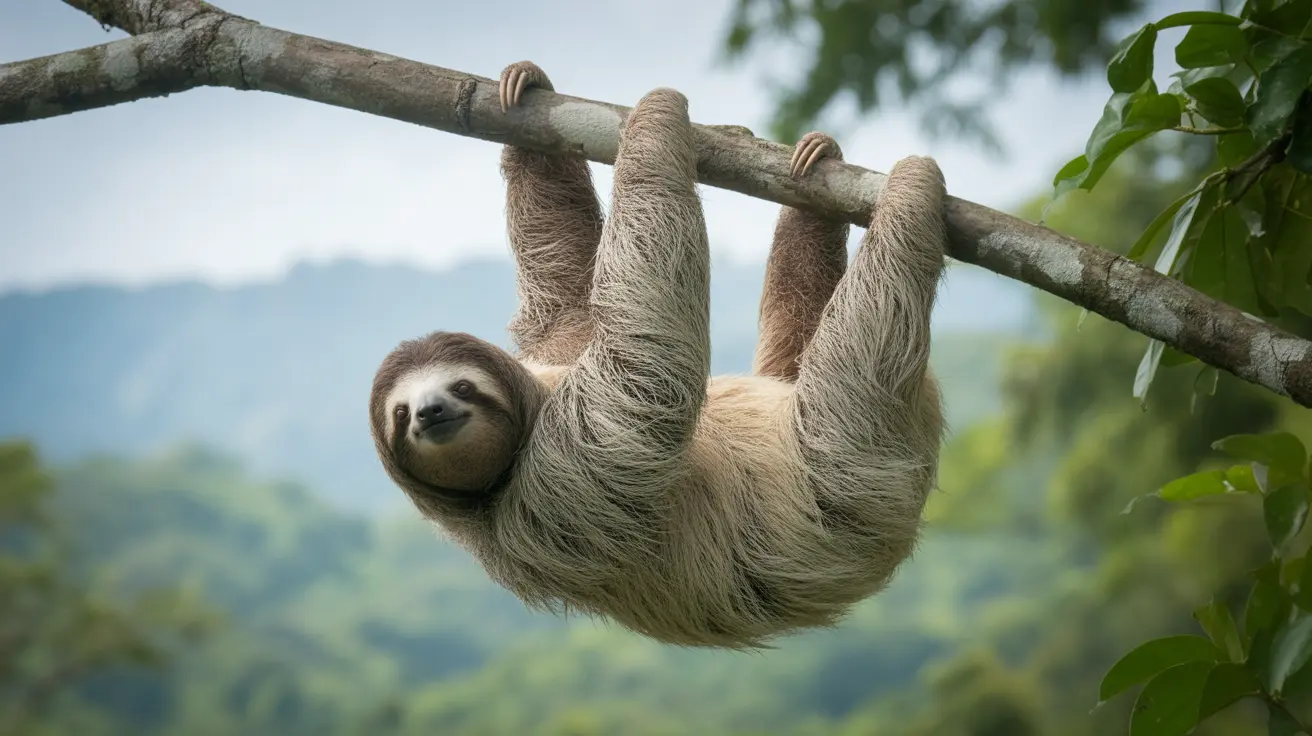
In the animal kingdom, few bathroom habits are as extraordinary—or as dangerous—as those of the three-toed sloth. These remarkable creatures engage in one of nature's most perilous weekly rituals, losing up to 30 percent of their body weight in a single bathroom trip. This incredible sloth poop phenomenon has puzzled scientists for decades and reveals fascinating insights into animal behavior that even pet owners can appreciate when observing their own animals' habits.
While most animals handle their bathroom needs with minimal fuss, three-toed sloths have evolved a complex and risky system that defies conventional wisdom. Understanding this unique behavior offers valuable lessons about animal physiology, survival strategies, and the intricate relationships that exist in nature.
The Weekly Bathroom Ritual That Defies Logic
Three-toed sloth defecation is unlike anything else in the animal world. These slow-moving mammals spend nearly their entire lives hanging upside down in tree canopies, yet once a week, they undertake a dangerous journey to the forest floor specifically to defecate. This behavior is so risky that approximately half of all sloth deaths occur during these vulnerable bathroom breaks.
The process is methodical and deliberate. Sloths climb down from their arboreal homes, find a suitable spot, dig a small hole with their tail, defecate, cover the waste, and then make the perilous journey back up to safety. This entire process can take several hours, during which the sloth is exposed to ground predators like jaguars, ocelots, and large snakes.
Why Sloths Poop on Ground Instead of From Trees
The question of why sloths don't simply defecate from the trees has led to extensive scientific research. Unlike their two-toed cousins who do relieve themselves from the canopy, three-toed sloths have developed this ground-based system for complex ecological reasons involving their unique relationship with moths and algae.
Scientists believe this behavior is connected to a remarkable three-way symbiotic relationship between sloths, moths, and the algae that grows in their fur. When sloths descend to poop, female moths living in their fur lay eggs in the fresh dung. The moth larvae develop in this nutrient-rich environment, eventually emerging as adults that fly back up to find new sloth hosts.
The Sloth Moth-Algae Relationship and Body Weight Loss
The connection between sloth body weight loss poop and their ecosystem becomes clearer when examining their fur. Sloth fur hosts specialized algae that provide camouflage and potentially nutritional benefits. The moths that complete their lifecycle in sloth dung contribute nitrogen and other nutrients that promote algae growth in the sloth's fur.
This explains the dramatic 30% body weight loss during defecation. Sloths have extremely slow metabolisms and can hold waste for extended periods. Their four-chambered stomach, similar to a cow's, ferments leaves slowly, creating substantial waste volume that accumulates throughout the week.
Sloth Digestion Rate and Weekly Poop Schedule
A sloth's slow metabolism is legendary in the animal kingdom. Their sloth digestion rate is so reduced that it can take up to 30 days for food to pass completely through their system. This incredibly slow process is an adaptation to their low-energy leaf diet, which provides minimal nutritional value.
The sloth diet leaves little room for dietary variety, consisting mainly of leaves from a few preferred tree species. This limited nutrition means sloths must conserve energy at every opportunity, leading to their famously slow movements and infrequent bathroom breaks.
Evolutionary Advantages Despite the Risks
Despite the obvious dangers of sloth predation during defecation, this behavior has persisted through evolution, suggesting significant benefits. The sloth latrines created by this weekly ritual serve as fertilizer hot spots, potentially benefiting the very trees that sloths depend on for food and shelter.
Additionally, the evolutionary reason sloth poop behavior continues may relate to territory marking and mate finding. These designated bathroom areas might serve as communication hubs where sloths can gather information about others in their territory.
Frequently Asked Questions
Why do three-toed sloths climb down trees to poop once a week?
Three-toed sloths descend to defecate as part of a complex ecological relationship with moths and algae. The moths in their fur need the fresh dung to lay eggs and complete their lifecycle, which in turn supports the algae growth in the sloth's fur that provides camouflage and nutrients.
How much body weight do sloths lose when they defecate?
Sloths can lose up to 30 percent of their body weight during their weekly bathroom trips. This dramatic weight loss occurs because their slow metabolism allows waste to accumulate for days, and their multi-chambered stomach ferments large volumes of fibrous plant material.
How slow is a sloth's digestion and what diet causes their weekly poop schedule?
Sloth digestion is extremely slow, taking up to 30 days for food to pass through their system completely. Their diet consists mainly of low-nutrition leaves, which their four-chambered stomach ferments slowly, leading to the accumulation of substantial waste that requires weekly elimination.
Understanding Nature's Most Unusual Bathroom Habits
The remarkable bathroom behavior of three-toed sloths demonstrates how evolution creates intricate solutions to survival challenges. While pet owners might find their animals' habits puzzling at times, the sloth's weekly ritual reminds us that every behavior serves a purpose in the grand scheme of nature.
This fascinating example of animal adaptation shows how even the most basic biological functions can evolve into complex ecological relationships that benefit entire ecosystems, proving that in nature, nothing is ever quite as simple as it seems.




