
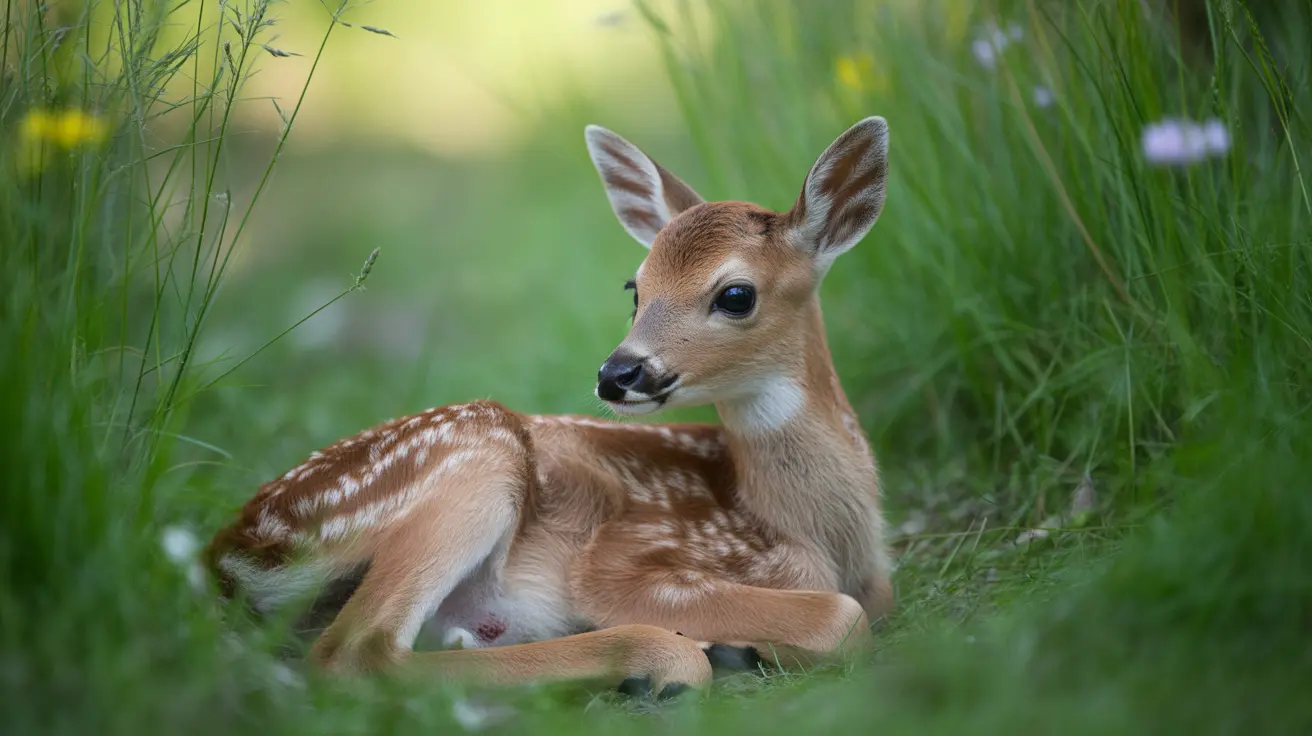
Why Do Deer Leave Fawns Alone and When Do They Return?
Mother deer naturally employ a survival strategy that may seem counterintuitive to humans. Does leave their newborn fawns alone for extended periods as part of an evolutionary adaptation designed to protect their young from predators.
During spring fawning season, mother deer typically return to nurse their babies only 2-3 times per day, usually at dawn and dusk. This fawn hiding strategy allows the mother to forage for food while keeping predators away from her vulnerable offspring. Fawns are born with spotted coats that provide excellent camouflage and naturally lack scent during their first few weeks of life.
Risks of Human Scent on Fawns
When humans touch or move baby wildlife, they leave behind scent markers that can actually endanger the animals. While mother deer won't typically abandon their young due to human scent, the foreign smell can attract predators or cause stress to both mother and baby when she returns.
True Orphan Wildlife Signs: When Intervention May Be Necessary
Wildlife experts emphasize that truly orphaned fawn are rare. Before assuming a young animal needs help, observe these critical signs:
- A fawn may genuinely need assistance if it's found crying continuously for more than 24 hours, appears injured or sick, or is found near a deceased mother deer.
- Similarly, baby rabbit kits should only be considered abandoned if their nest has been destroyed or the mother has been observed dead nearby.
Fledgling Bird on Ground: Natural or Emergency?
Many young birds naturally spend time on the ground as they learn to fly. Parent birds continue to feed and protect fledglings even when they're not in the nest. Only birds that are obviously injured, have been attacked by pets, or are very young with few feathers typically require human intervention.
Don't Rescue Baby Wildlife: Legal and Practical Considerations
Kentucky state law provides legal protections for native wildlife, making it illegal for unlicensed individuals to capture, possess, or relocate most wild animals, including deer, rabbits, and songbirds. These regulations exist to protect both wildlife populations and public safety.
Improper care of wild animals can lead to malnutrition, disease transmission, and behavioral problems that make eventual release impossible. Wildlife rehabilitation requires specialized knowledge, proper facilities, and state permits.
Wildlife Rehabilitation Hotline Kentucky
When genuine wildlife emergencies occur, Kentucky residents should contact licensed wildlife rehabilitators or the Kentucky Department of Fish and Wildlife Resources. These professionals can assess whether intervention is necessary and provide appropriate care if needed.
Mother Animals Leave Young: A Natural Survival Strategy
Understanding that mother animals leave young temporarily helps prevent unnecessary human interference. This behavior extends beyond deer to include rabbits, raccoons, opossums, and many bird species. Each species has evolved specific strategies to maximize their offspring's survival chances.
Pet owners who encounter wildlife in their yards should simply observe from a distance and keep domestic animals indoors or leashed to avoid disturbing natural processes.
Frequently Asked Questions
What should I do if I find a baby deer fawn alone in the woods?
Leave the fawn undisturbed and observe from a distance. Mother deer only visit their babies 2-3 times daily, so a fawn alone during daylight hours is normal behavior. Only contact wildlife authorities if the fawn appears injured or cries continuously for over 24 hours.
Why do mother deer leave their fawns alone and when do they return?
Mother deer leave fawns alone as a natural protection strategy. The mother returns primarily at dawn and dusk to nurse, spending most of the day foraging away from her baby to avoid attracting predators to the fawn's location.
How can I tell if a baby rabbit or bird is truly orphaned or just waiting for its mother?
Baby rabbits are only visited by mothers briefly at dawn and dusk, so finding them alone during the day is normal. For birds, fledglings naturally spend time on the ground while learning to fly. Only intervene if you observe obvious injury, continuous distress calls lasting over 24 hours, or evidence that the mother has died.
Protecting Wildlife Through Education
Kentucky's spring fawning season serves as an important reminder that the best way to help wildlife is often to simply leave them alone. By understanding natural animal behaviors and respecting legal protections for native species, residents can enjoy observing wildlife while ensuring young animals have the best chance for survival in their natural habitat.




