
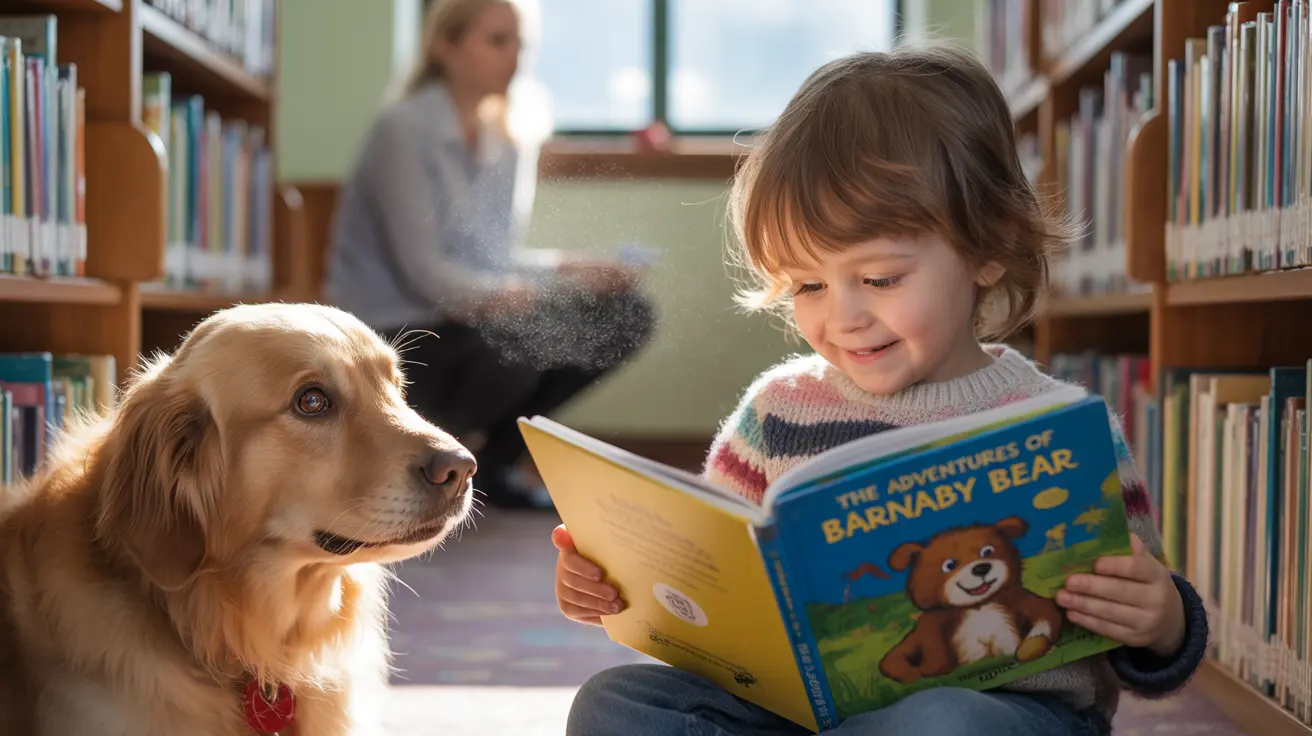
Therapy Dogs Reading Programs: Transforming Literacy Development
Therapy dogs reading programs are revolutionizing the way children develop literacy skills, offering a unique approach that combines the natural comfort animals provide with structured educational support. These innovative programs, found in schools and libraries across the country, create non-judgmental environments where young readers can practice their skills with four-legged listeners who offer unconditional patience and encouragement.
According to educational research, reading with animals can significantly improve fluency and comprehension skills while fostering positive attitudes toward reading. Dogs serve as ideal audience members because they listen without criticism, creating comfortable spaces where children feel safe to take reading risks and build confidence in their abilities.
Reading to Dogs Improve Fluency: The Science Behind Success
The effectiveness of therapy dogs reading programs lies in their ability to reduce reading anxiety and create stress-free learning environments. When children read aloud to therapy dogs, they experience measurable improvements in oral reading fluency compared to traditional peer-to-peer or adult-supervised reading sessions.
Research demonstrates that second-graders who participated in dog-assisted reading programs increased their oral reading fluency by 45 percent over five weeks, significantly outperforming the 21 percent improvement seen in children who read to peers alone. This dramatic difference highlights how therapy dogs help struggling readers overcome barriers that might otherwise limit their progress.
The non-threatening presence of therapy dogs allows children to focus on their reading without fear of judgment or correction. Unlike human listeners, dogs don't interrupt with feedback or criticism, enabling young readers to practice at their own pace and build confidence naturally.
Therapy Dogs Boost Reading Confidence Across All Learning Levels
Children in early elementary grades, particularly kindergarten through second grade, experience the most significant benefits from canine assisted reading education programs. However, the positive impact extends beyond primary grades to include special education students, ESL learners, and children reading below grade level.
These programs create inclusive environments where every child can succeed. Special education students often show remarkable improvements in both reading skills and classroom engagement, while ESL students benefit from practicing English in a supportive, non-judgmental setting.
Teachers consistently report that children participating in Reading Education Assistance Dogs (R.E.A.D.) programs demonstrate increased willingness to volunteer for reading activities, greater participation in classroom discussions, and improved overall enthusiasm for learning.
Animal Assisted Reading Programs: Structure and Implementation
Successful therapy dog library programs and school-based initiatives follow structured formats designed to maximize educational benefits. Programs typically meet once weekly for 20 minutes to one hour throughout the school year, with sessions lasting 5-8 weeks.
Licensed and trained therapy dogs work alongside their handlers—either owners or trained volunteers—in classroom or library settings. These programs maintain high standards for animal behavior and safety while ensuring educational objectives are met through regular assessment of reading fluency and attitude surveys.
The Paws to Read program model emphasizes consistency and routine, helping children develop regular reading habits while building relationships with their canine reading partners. This structure provides the stability necessary for meaningful educational progress.
Improve Children's Reading Skills with Dogs: Long-term Benefits
Beyond immediate fluency improvements, therapy dogs for ESL students and struggling readers create lasting positive changes in academic engagement. Children who participate in these programs often improve their reading skills by at least two grade levels over an entire school year.
The benefits extend beyond reading metrics to include improved attitudes toward learning, increased classroom participation, and enhanced social-emotional development. Teachers observe that children who initially struggled with reading anxiety often become enthusiastic participants in various academic activities.
These programs also support broader educational goals by demonstrating that learning can be enjoyable and stress-free, helping children develop positive associations with academic challenges.
Frequently Asked Questions
How much do children's reading skills improve when reading to therapy dogs compared to reading alone?
Studies show that children reading to therapy dogs demonstrate significantly greater improvements in oral reading fluency than those reading to peers or adults alone. For example, second-graders who read to dogs increased their oral reading fluency by 45 percent over five weeks, compared to just 21 percent for those reading to peers. Children in programs like Paws to Read typically improve their reading skills by at least two grade levels over an entire school year.
What makes therapy dogs effective for helping struggling readers build confidence?
Therapy dogs provide a non-judgmental, low-stress listening environment that reduces anxiety and creates positive attitudes toward reading. Unlike human listeners, dogs do not criticize or correct, making children feel more comfortable taking risks with their reading. Research shows that children who read to therapy dogs report increased reading confidence, greater willingness to read aloud, and improved enthusiasm for reading, particularly those who attend multiple sessions.
Which children benefit most from reading to therapy dogs?
Children in early elementary grades (kindergarten through grade 2) see the greatest benefits, with second-graders showing the most significant fluency gains. Special education students, ESL learners, and children reading below grade level experience outsized improvements in both skills and confidence. The programs also benefit reluctant readers and those with reading anxiety.
Therapy dogs reading programs represent a powerful tool for educators and parents seeking innovative approaches to literacy development. By combining the natural comfort animals provide with structured educational support, these programs create pathways to reading success that benefit children across all learning levels and backgrounds.




