
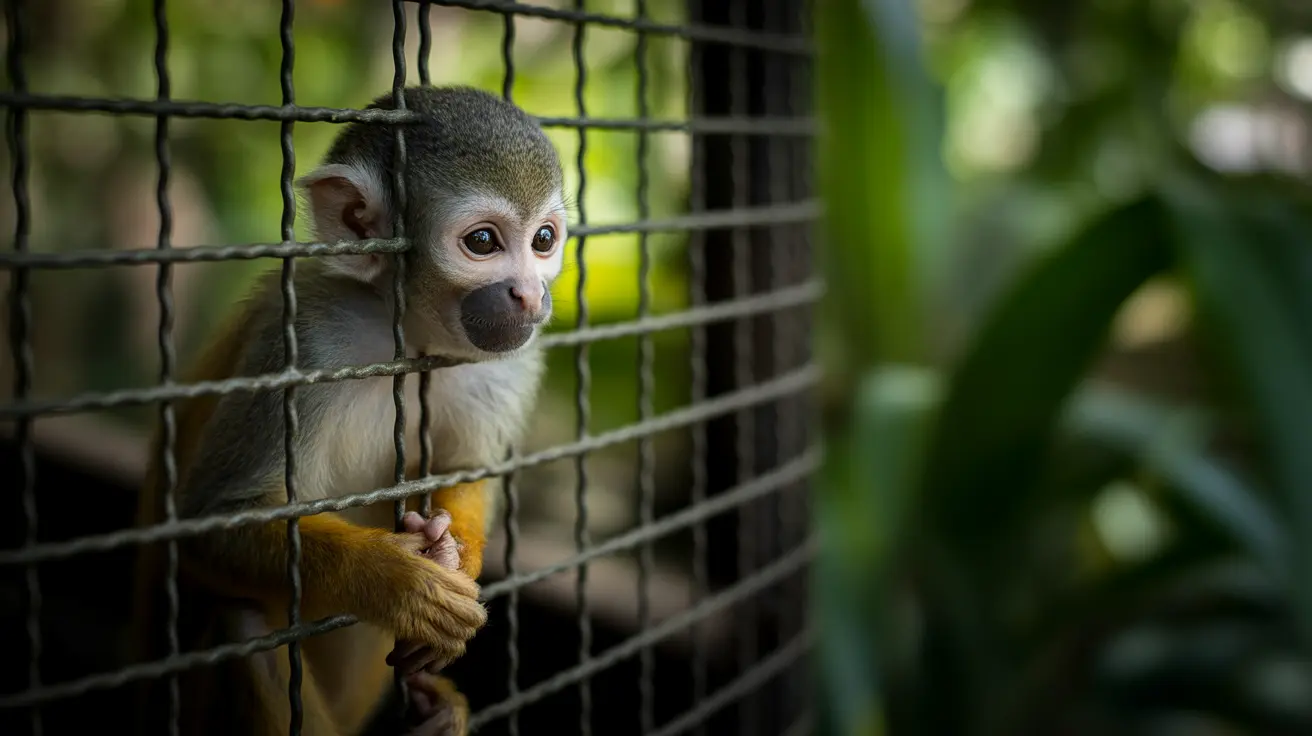
What is Zoochosis and Its Core Symptoms
Zoochosis describes the psychological condition that develops when animals cannot cope with the stress and limitations of captivity. The term encompasses various stereotypical behaviors that serve no apparent purpose and often involve repetitive movements or self-destructive actions.
Common zoochosis symptoms include continuous pacing along enclosure boundaries, repetitive swaying or rocking motions, excessive grooming leading to hair loss or skin damage, and compulsive behaviors like repeatedly touching the same surface or moving in figure-eight patterns. In severe cases, animals may engage in self-mutilation or demonstrate withdrawn, depressive behaviors.
Captive Animal Stress and Its Underlying Causes
The causes of zoochosis stem from the fundamental mismatch between an animal's natural behavioral needs and the constraints of captivity. Wild animals have evolved complex behavioral patterns that help them survive, including territorial roaming, hunting, social interactions, and seasonal migrations. When these natural behaviors cannot be expressed, psychological stress accumulates.
Environmental factors contribute significantly to the development of stereotypical behaviors in zoos. Inadequate space, lack of mental stimulation, inappropriate social groupings, and artificial lighting or temperature conditions all contribute to stress. Additionally, the constant presence of humans and unnatural sounds can create chronic anxiety for sensitive species.
Zoo Animal Pacing and Species-Specific Manifestations
Different species exhibit unique forms of zoochosis based on their natural behaviors and psychological needs. Large carnivores like big cats and bears commonly develop pacing behaviors, walking the same path repeatedly for hours. This mirrors their natural territory patrolling instincts but becomes compulsive in confined spaces.
Zoochosis in elephants often manifests as repetitive swaying, head bobbing, or shifting weight from foot to foot. These intelligent, social animals are particularly susceptible due to their complex emotional needs and natural requirement for extensive roaming ranges.
Marine mammals, including those experiencing zoochosis in orcas, may swim in repetitive patterns, float motionlessly for extended periods, or engage in aggressive behaviors toward tank walls or other animals. The artificial environment of aquariums cannot replicate the vast ocean territories these animals would naturally inhabit.
Prevalence of Zoochosis in Zoos and Current Solutions
Research indicates that zoochosis affects a significant percentage of captive animals, with some studies suggesting that stereotypical behaviors occur in over 80% of carnivores in certain facilities. The prevalence varies based on factors including species, enclosure design, management practices, and institutional commitment to animal welfare.
Modern zoos increasingly recognize the importance of addressing this issue through environmental enrichment programs. These initiatives aim to provide mental and physical stimulation that mimics natural behaviors. Examples include puzzle feeders that encourage foraging, varied terrain that promotes exploration, and social groupings that allow for natural interactions.
Animal Welfare in Captivity and Ethical Considerations
The presence of zoochosis raises fundamental questions about zoo ethical issues and the balance between conservation education goals and individual animal welfare. While many modern facilities have improved their practices significantly, the persistence of stereotypical behaviors highlights ongoing challenges in captive animal management.
Stress hormones in zoo animals provide measurable indicators of psychological well-being, with elevated cortisol levels often correlating with the presence of stereotypical behaviors. This biological evidence supports behavioral observations and helps facilities assess the effectiveness of their animal welfare programs.
Frequently Asked Questions
What is zoochosis and what are its main symptoms in captive animals?
Zoochosis is a psychological condition affecting captive animals, characterized by repetitive, purposeless behaviors such as pacing, swaying, excessive grooming, and in severe cases, self-mutilation. These stereotypical behaviors indicate an animal's inability to cope with captivity stress and represent attempts to manage psychological distress.
Why do zoo animals develop zoochosis and how common is it?
Animals develop zoochosis when their natural behavioral needs cannot be met in captivity, leading to chronic stress and psychological dysfunction. Studies suggest that stereotypical behaviors affect a majority of captive animals, with prevalence rates varying by species and facility quality, but potentially affecting over 80% of large carnivores in some institutions.
Which animals are most affected by zoochosis in zoos and aquariums?
Large carnivores like big cats and bears, intelligent species such as elephants and primates, and marine mammals including orcas and dolphins are particularly susceptible to zoochosis. These animals typically have complex behavioral needs, large natural territories, and sophisticated social structures that are difficult to replicate in captivity.
Moving Forward: Lessons for All Animal Care
Understanding zoochosis serves as a crucial reminder of the importance of environmental enrichment and psychological well-being for all animals under human care. While this condition primarily affects zoo animals, the principles of providing adequate space, mental stimulation, and species-appropriate environments apply to domestic pet care as well.
As awareness of animal psychology continues to grow, the responsibility lies with all of us to support institutions that prioritize animal welfare and to apply these lessons in our own relationships with animals, ensuring that every creature under human care receives the physical and psychological support they need to thrive.




