
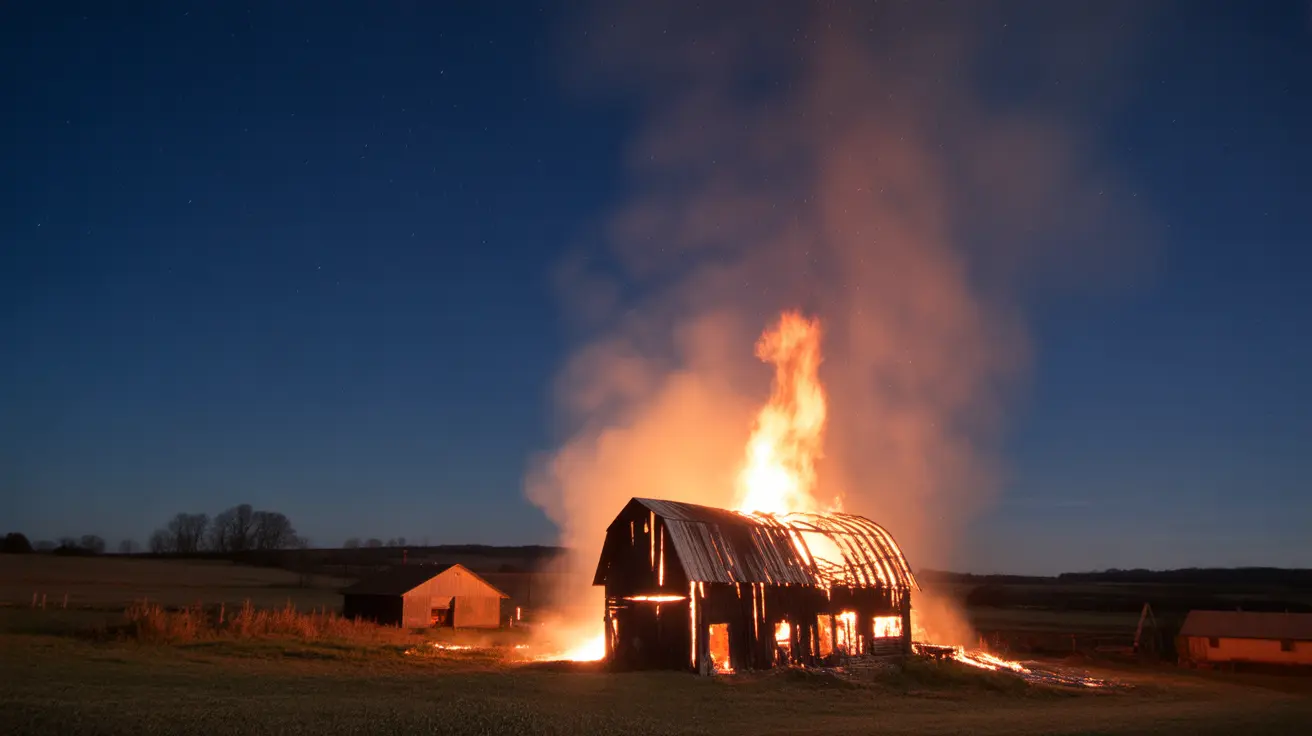
A devastating barn fire in Cayuga County, New York, has resulted in the tragic loss of more than 70 animals, according to the New York State Police. This heartbreaking incident serves as a stark reminder of the critical importance of barn fire prevention measures for farmers and livestock owners across the state and beyond.
The Aurelius NY barn fire represents one of the most significant agricultural disasters in the region this year, highlighting the urgent need for comprehensive fire safety protocols on farms housing livestock. When barn fires occur, the consequences extend far beyond property damage—they often result in devastating animal loss and emotional trauma for farming families who care deeply for their livestock.
Understanding Livestock Barn Fire Causes
Barn fires can originate from various sources, making agricultural fire prevention a complex challenge for farmers. Electrical malfunctions remain one of the leading causes, particularly in older barns where wiring may not meet current safety standards. Heat lamps used for young animals, faulty equipment, and overloaded circuits can all spark dangerous fires.
Another significant risk factor involves hay spontaneous combustion, which occurs when improperly cured or stored hay generates heat through bacterial fermentation. This natural process can reach temperatures high enough to ignite surrounding materials, making proper hay storage techniques essential for dairy barn fire safety.
The Reality of New York Farm Fire Incidents
New York dairy farm fires occur more frequently than many realize, with rural properties facing unique challenges in fire response and prevention. The state's agricultural regions often have longer emergency response times due to remote locations, making early detection and prevention systems crucial for protecting both livestock and property.
Farm fire investigation typically reveals that most incidents could have been prevented with proper safety measures and regular maintenance. The economic impact extends beyond immediate losses, affecting local communities and food supply chains while causing immeasurable emotional distress to farming families.
Essential Prevention Strategies for Farmers
Effective barn fire prevention begins with regular electrical system inspections and upgrades. Farmers should ensure all wiring meets current codes and consider installing ground-fault circuit interrupters in areas where moisture is present. Heat lamps and electrical equipment should be secured properly and inspected regularly for wear or damage.
Proper ventilation systems help prevent the buildup of flammable gases and reduce moisture that can contribute to electrical hazards. Installing smoke detectors and fire suppression systems provides early warning and can contain small fires before they become catastrophic.
Storage and Maintenance Best Practices
Safe hay storage requires monitoring moisture content before baling and allowing proper curing time. Hay should be stored away from livestock areas when possible, and farmers should regularly check stored hay for unusual heat or odors that might indicate fermentation issues.
Maintaining clear evacuation routes and emergency plans ensures that both humans and animals can exit safely in case of fire. Regular cleaning to remove dust, cobwebs, and combustible materials reduces fire spread risk significantly.
Support Resources for Affected Farmers
Following devastating incidents like the Cayuga County barn fire, farmers may be eligible for various forms of assistance. USDA farm fire grants and disaster relief programs can help with rebuilding efforts, while agricultural insurance policies may cover livestock losses and property damage.
The emotional impact of livestock fire trauma affects entire farming families and communities. Counseling services and peer support groups help farmers cope with the psychological aftermath of losing animals they've cared for throughout their lives.
Moving Forward: Building Safer Agricultural Communities
The tragic loss in Cayuga County underscores the critical need for proactive safety measures across all agricultural operations. By implementing comprehensive fire prevention strategies and maintaining vigilance about potential hazards, farmers can significantly reduce the risk of similar devastating incidents.
Rural barn fire response capabilities continue to improve through enhanced training and equipment, but prevention remains the most effective protection strategy. Every farming operation, regardless of size, benefits from establishing and regularly reviewing fire safety protocols.
Frequently Asked Questions
- How can farmers prevent barn fires from killing livestock like in the Cayuga County incident?
Farmers should install proper smoke detection systems, maintain electrical equipment regularly, ensure adequate ventilation, create clear evacuation plans for animals, and store flammable materials safely away from livestock areas. Regular fire drills and safety inspections are also essential.
- What are the most common causes of barn fires on dairy farms in New York?
The leading causes include electrical malfunctions, spontaneous combustion of improperly stored hay, heating equipment failures, and lightning strikes. Poor ventilation and accumulated dust or debris can accelerate fire spread once ignition occurs.
- What should farmers do immediately after a barn fire to protect surviving animals?
First, ensure all animals are moved to safe locations away from smoke and potential structural collapse. Contact veterinarians to assess animals for smoke inhalation or injuries, provide fresh water and feed in temporary shelters, and document losses for insurance purposes while seeking immediate support resources.
- Why do hay bales spontaneously combust and how to store them safely?
Hay combusts when moisture content exceeds safe levels during baling, causing bacterial fermentation that generates heat. Store hay only after proper curing, monitor moisture levels below 20%, ensure adequate ventilation around storage areas, and regularly check for unusual heat or sweet odors.
- Are there grants or insurance options for New York farms rebuilding after a livestock barn fire?
Yes, farmers may qualify for USDA disaster assistance programs, emergency loans, and conservation grants for rebuilding with improved safety features. Agricultural insurance policies often cover livestock losses and property damage, while state programs may provide additional support for qualifying operations.




