
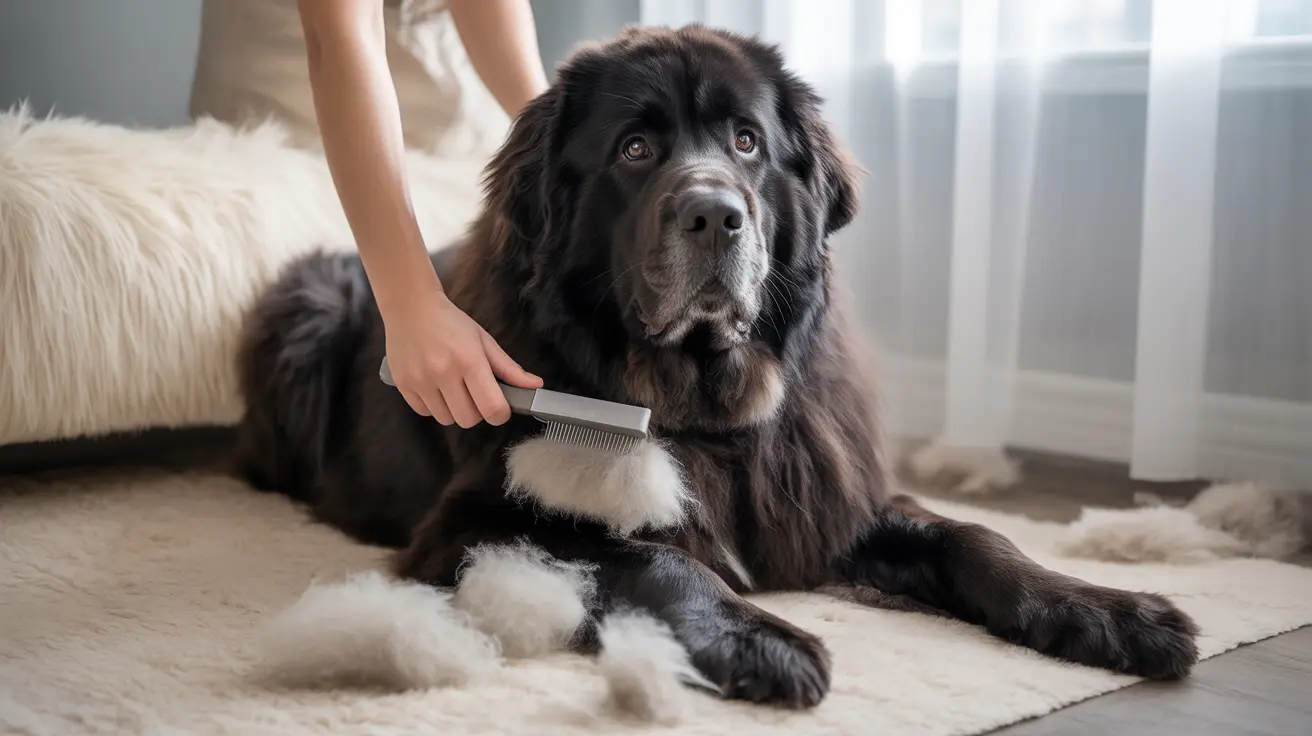
Si estás considerando sumar un terranova a tu familia, conocer sus patrones de muda y las necesidades de cuidado de su pelaje es fundamental. Estos gentiles gigantes destacan por su imponente doble capa de pelo terranova, que cumple funciones esenciales pero también requiere un mantenimiento específico. A continuación, te contamos todo lo que necesitas saber sobre la pérdida de pelo estacional terranova y cómo manejarla de manera efectiva.
La respuesta breve es sí: el terranova muda mucho pelo. Aunque según los estándares se consideran mudadores moderados, su gran tamaño implica que la cantidad real de pelo suelto puede ser considerable. Comprender los ciclos de control de la muda en terranova y establecer rutinas de cepillado adecuadas es clave tanto para la salud del perro como para la limpieza del hogar.
Comprendiendo la doble capa de pelo del terranova
El terranova posee una particular doble capa de pelo terranova, formada por una capa externa resistente al agua y un subpelo suave y aislante. Este pelaje, que históricamente les permitió colaborar en rescates acuáticos y soportar condiciones climáticas adversas, está compuesto por una capa exterior áspera y recta y por una interna densa y mullida. Ambas son esenciales para protegerlos del frío y la humedad.
Pérdida de pelo estacional en terranova
Aunque el terranova muda pelo a lo largo de todo el año, existen dos épocas clave durante las cuales la cantidad de pelo perdido aumenta notablemente: primavera y otoño. En estas estaciones, que se extienden aproximadamente durante 3 o 4 semanas, "renuevan" el subpelo, lo que se traduce en una pérdida de pelo estacional terranova mucho más evidente. Este proceso natural les ayuda a adaptarse a los cambios de temperatura.
Cómo controlar la muda diaria
Incluso fuera de las temporadas de muda intensa, el terranova requiere cuidados regulares para el correcto control de la muda en terranova. El cómo cepillar un terranova se vuelve aún más importante durante la caída estacional, siendo lo ideal cepillarlo cada día en esas etapas y, como mínimo, una vez por semana el resto del año. Usar las herramientas para peinar terranova adecuadas, como cepillos tipo carda y rastrillos para el subpelo, te permitirá retirar el pelo suelto antes de que acabe esparcido por la casa.
Herramientas esenciales y técnicas para el cepillado
El éxito en el acicalado profesional de terranova o en casa depende de las herramientas y del método que utilices:
- Mejor cepillo para terranova: carda de púas largas
- Rastrillo para el subpelo
- Peine metálico de púas anchas
- Secador profesional de alto caudal
- Spray acondicionador específico para perros
Utilizadas de forma regular y adecuada, estas herramientas previenen la formación de nudos y reducen el impacto de la muda en casa terranova. Si buscas consejos para pelo sano terranova, insiste en los cepillados profundos y el desenredo del subpelo.
Necesidades de aseo y acicalado profesional de terranova
Aunque el mantenimiento en el hogar es fundamental, acudir a un peluquero profesional cada 6 a 8 semanas refuerza la salud del pelaje. Un profesional puede:
- Retirar por completo el subpelo muerto
- Detectar y tratar posibles problemas de piel
- Aplicar técnicas de baño y secado especializadas (cómo secar correctamente el pelaje terranova, incluir un correcto uso del secador profesional y controlar cuánto tarda en secarse un terranova)
- Cortar uñas y limpiar oídos
- Asesorar sobre la rutina diaria de cepillado terranova ideal para tu mascota
Consultar con el profesional también es la mejor manera de decidir cuándo llevar al terranova al peluquero según el tipo y estado del manto.
Impacto de la muda en el hogar
Convivir con un terranova supone acostumbrarse a la presencia de pelo. Algunas estrategias útiles para el control de la muda en terranova y la limpieza del hogar con terranova incluyen:
- Aspirar con frecuencia (a menudo a diario)
- Usar fundas de muebles lavables
- Instalar sistemas de filtrado de aire eficientes
- Mantener varios rodillos quita-pelusas a mano
- Definir áreas específicas del hogar para el perro
Estas medidas ayudan a minimizar el impacto de la muda en casa terranova y facilitan el día a día, especialmente en hogares donde hay alergias y terranovas.
Conclusión
Si bien el terranova muda mucho pelo, instaurar buenas rutinas de cuidados del pelaje terranova y entender sus necesidades hace que la convivencia sea perfectamente posible. La clave está en la constancia, el uso de las herramientas para peinar terranova adecuadas, y la combinación de cuidados en casa y visitas regulares al acicalado profesional de terranova. Así, tu terranova lucirá siempre un manto sano y brillante, y tu hogar estará mucho más libre de pelo.
Preguntas Frecuentes
¿El terranova muda mucho pelo a lo largo del año?
Sí, el terranova muda pelo durante todo el año, pero especialmente en primavera y otoño donde la muda es más intensa.
¿Con qué frecuencia debo cepillar a un terranova?
Es recomendable cepillarlo al menos dos o tres veces por semana y a diario durante los periodos de muda intensa.
¿Qué herramientas son mejores para peinar el pelaje del terranova?
Se recomienda usar carda, cepillo metálico de púas largas y un peine de púas anchas para el subpelo.
¿El baño frecuente daña el pelaje del terranova?
No debe bañarse demasiado seguido; cada 6 a 8 semanas o cuando esté realmente sucio, usando siempre champú para perros de doble capa.
¿Cómo evitar los nudos y enredos en el pelo del terranova?
El cepillado regular y profundo en el subpelo previene la formación de nudos, sobre todo detrás de las orejas y en las patas.
¿Es recomendable llevar el terranova al peluquero profesional?
Sí, acudir al peluquero cada 6–8 semanas ayuda a mantener el pelaje y controlar mejor la muda.
¿El pelaje del terranova produce alergias?
Su abundante pelo puede aumentar la presencia de alérgenos, por lo que no es ideal para personas muy sensibles a alergias.
¿Es peligroso cortar el pelo del terranova muy corto o raparlo?
Sí, nunca se debe rapar ni cortar demasiado, pues su doble capa protege de temperatura y humedad.
¿Cómo limpiar la casa cuando hay mucha muda de terranova?
Se aconseja aspirar con frecuencia, usar fundas lavables y mantener zonas establecidas para el perro para facilitar la limpieza.
¿El cuidado del pelaje influye en la salud de la piel del terranova?
Sí, un buen aseo previene infecciones, dermatitis y formación de nudos dolorosos en la piel.




