
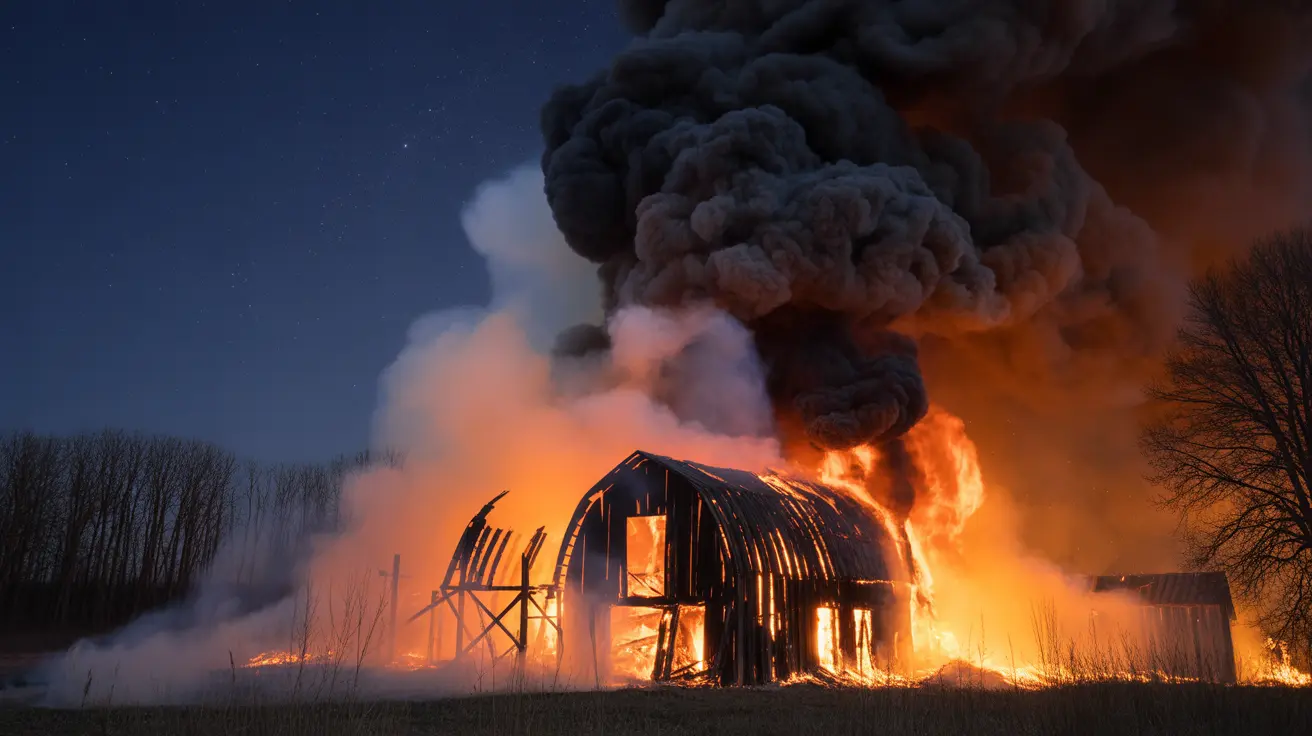
A devastating barn fire in Aurelius, Cayuga County, has claimed the lives of more than 70 farm animals, highlighting the ongoing fire safety challenges facing rural agricultural operations. The tragic incident killed approximately 40 ducks, 30 turkeys, several chickens, and one pig that were housed inside the structure when the blaze erupted.
This heartbreaking event serves as a stark reminder of the vulnerability of farm animals and the critical importance of comprehensive fire prevention measures for agricultural facilities. For pet owners and small-scale farmers who keep poultry or other livestock, understanding fire risks and prevention strategies can mean the difference between safety and catastrophic loss.
The Aurelius barn fire underscores the urgent need for enhanced fire safety protocols in rural farming communities, where emergency response times may be longer and resources more limited than in urban areas.
New York Livestock Fire Challenges in Rural Communities
Farm fires present unique challenges in rural settings like Cayuga County. Agricultural structures often contain highly combustible materials, including hay, straw, and wooden construction elements that can accelerate fire spread. When combined with the presence of livestock, these conditions create complex emergency scenarios that require specialized response protocols.
Rural barn fire safety becomes particularly challenging due to several factors. Remote locations may delay emergency response times, while limited water sources can hamper firefighting efforts. Additionally, the presence of multiple animal species with different evacuation needs complicates rescue operations during critical moments.
Barn Fire Prevention Strategies for Animal Safety
Effective barn fire prevention begins with understanding common ignition sources. Electrical systems should be regularly inspected by qualified professionals, particularly in older agricultural buildings where wiring may not meet current safety standards. Heat lamps, commonly used for poultry, require careful placement and monitoring to prevent contact with combustible materials.
Proper storage of flammable materials plays a crucial role in reducing fire risks. Hay and straw should be stored in separate structures when possible, and moisture content should be monitored to prevent spontaneous combustion. Fuel storage areas must be located away from animal housing and equipped with appropriate safety measures.
Poultry Barn Fire Causes and Prevention
Poultry operations face specific fire risks due to dust accumulation, heat sources, and high animal density. Regular cleaning to remove dust and debris helps reduce fuel for potential fires. Ventilation systems should be maintained to prevent overheating while ensuring adequate air circulation for animal health.
For farms housing ducks, turkeys, and chickens like the affected Aurelius facility, implementing multiple safety zones can help compartmentalize risks. This includes creating firebreaks between structures and ensuring multiple exit routes for both animals and caretakers during emergencies.
Agricultural Fire Safety Tips for Farm Owners
Developing a comprehensive fire safety plan is essential for any agricultural operation. This includes establishing clear evacuation procedures for different animal species, maintaining accessible firefighting equipment, and ensuring all farm personnel understand emergency protocols.
Regular safety inspections should cover electrical systems, heating equipment, and storage areas. Installing smoke detectors and fire alarms can provide early warning, while automatic sprinkler systems offer additional protection for valuable livestock and equipment.
Communication systems become critical during rural emergencies. Farm owners should ensure reliable methods for contacting emergency services and neighboring farms that might provide assistance during crisis situations.
Recovery and Support Resources
Following devastating events like the Cayuga County poultry fire, affected farmers need access to recovery resources and support systems. Many agricultural communities offer mutual aid programs, while state and federal agencies may provide disaster assistance for qualifying operations.
Insurance considerations become paramount for farm operations. Adequate coverage should protect both structures and livestock, while business interruption insurance can help maintain operations during recovery periods.
Frequently Asked Questions
What caused the barn fire in Aurelius, Cayuga County that killed over 70 animals?
While the specific cause of the Aurelius barn fire has not been detailed in available reports, barn fires commonly result from electrical malfunctions, heating equipment issues, or spontaneous combustion of stored materials like hay.
How can farm owners prevent barn fires involving ducks, turkeys, and chickens?
Prevention strategies include regular electrical inspections, proper heat lamp placement, adequate ventilation, dust control, fire-resistant storage practices, and developing comprehensive emergency evacuation plans for different animal species.
What are the common fire safety challenges for rural poultry barns in New York?
Rural barn fire safety challenges include longer emergency response times, limited water access for firefighting, combustible construction materials, dust accumulation from poultry operations, and the complexity of evacuating multiple animal species during emergencies.
Moving Forward: Learning from Tragedy
The devastating loss of over 70 animals in the Aurelius barn fire serves as a sobering reminder of the importance of proactive fire safety measures in agricultural settings. While we cannot undo this tragic event, we can honor these animals by implementing stronger safety protocols and supporting affected farming communities.
For pet owners and small-scale farmers, this incident emphasizes the critical need for comprehensive fire prevention planning, regular safety maintenance, and community support systems that help protect both animals and agricultural livelihoods.




