
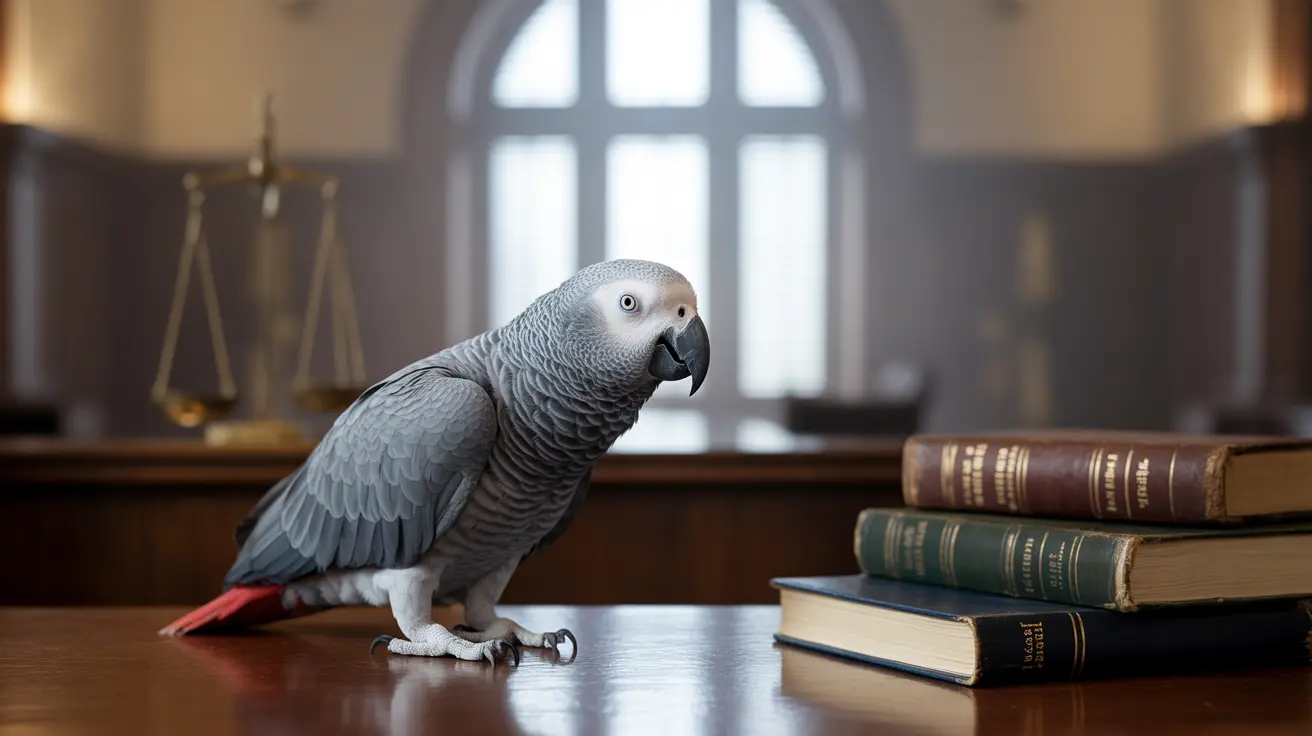
The concept of parrot witness testimony in legal proceedings has captured public imagination for decades, raising intriguing questions about the intersection of animal intelligence and the justice system. While parrots, particularly African Grey parrots, demonstrate remarkable abilities to mimic human speech and retain complex vocalizations, the legal system maintains strict barriers against animal testimony that go far beyond simple communication skills.
For pet owners who marvel at their talking birds' apparent understanding and memory, the idea that a parrot could serve as a courtroom witness might seem logical. However, the reality of legal proceedings involves complex requirements for witness competency that no animal can currently meet, regardless of their cognitive abilities or vocal talents.
The Legal Barriers to Animal Testimony
Modern legal systems require witnesses to possess specific competencies that form the foundation of reliable testimony. Witnesses must demonstrate the ability to understand the difference between truth and falsehood, comprehend the moral and legal obligation to tell the truth, and possess sufficient memory and communication skills to accurately recount events.
Animal competency witness stand requirements extend beyond mere vocalization. Courts need witnesses who can be cross-examined, understand the consequences of perjury, and distinguish between reality and imagination. These cognitive and ethical requirements create insurmountable animal testimony legal barriers that protect the integrity of legal proceedings.
The Hearsay Rule and Animal Evidence
The hearsay rule animals face represents another significant obstacle. Even if a parrot perfectly repeats overheard conversations, this constitutes hearsay evidence – secondhand information that cannot be properly verified or challenged. Legal systems generally prohibit hearsay evidence because it lacks the reliability safeguards that direct testimony provides.
Notable Cases of Parrots in Crime Investigation
Despite legal limitations, several high-profile cases have featured parrots as potential sources of evidence, capturing media attention and public fascination with talking parrot court case scenarios.
Bud the Parrot Michigan Murder Case
One of the most famous examples involves Bud the parrot Michigan murder, where an African Grey parrot allegedly repeated phrases that investigators believed could provide insights into a violent crime. While the parrot's vocalizations generated significant media coverage and public interest, the bird's statements were ultimately deemed inadmissible as evidence due to fundamental legal principles governing witness testimony.
These cases highlight the distinction between potentially helpful information and legally admissible evidence, demonstrating why parrot evidence admissibility remains a complex issue that courts continue to reject.
African Grey Parrot Intelligence and Memory
African Grey parrot crime witness cases often generate attention because these birds possess exceptional cognitive abilities. African Greys can learn hundreds of words, understand context, and demonstrate problem-solving skills that surpass many other animal species.
Research suggests that African Greys may retain traumatic or emotionally significant events more clearly than routine interactions, which explains why parrot trauma memory often features prominently in criminal cases. However, their inability to distinguish between deliberate communication and instinctive mimicry prevents their statements from meeting legal evidence standards.
Historical Perspective on Animals in Legal Settings
Medieval animal trials provide fascinating historical context for modern discussions about animal testimony. During medieval times, animals were occasionally put on trial for various offenses, treated as moral agents capable of legal responsibility. These proceedings, while reflecting different legal philosophies, demonstrate humanity's long-standing struggle to define the relationship between animals and justice systems.
Modern legal frameworks have evolved to recognize that while animals possess various forms of intelligence, they lack the specific cognitive and moral capacities required for legal participation as witnesses or defendants.
Implications for Pet Owners
Understanding parrot legal evidence limitations helps pet owners maintain realistic expectations about their birds' potential roles in legal situations. While parrots make wonderful companions and can provide emotional support during difficult times, their vocalizations cannot serve as substitute testimony in criminal or civil proceedings.
Pet owners should focus on documenting important events through traditional means and ensuring their animals receive proper care and training rather than expecting legal recognition of their pets' cognitive abilities.
Frequently Asked Questions
- Can a parrot testify as a witness in court?
No, parrots cannot testify as witnesses in court. Legal systems require witnesses to understand truth versus falsehood, comprehend oath-taking, and submit to cross-examination – capabilities that no animal currently possesses according to legal standards.
- Why can't parrots be used as witnesses even if they can talk and mimic what they hear?
Parrot vocalizations constitute hearsay evidence and cannot be properly verified or challenged in court. Additionally, parrots cannot distinguish between intentional communication and instinctive mimicry, making their statements unreliable for legal purposes.
- What is an example of a parrot helping solve a crime?
The Bud the parrot Michigan murder case involved an African Grey that allegedly repeated phrases related to a violent crime. While the case generated media attention, the parrot's statements were not admitted as evidence due to legal restrictions on animal testimony.
Conclusion
While the idea of parrot witness testimony continues to fascinate the public, legal systems maintain clear boundaries that prevent animals from serving as courtroom witnesses. These restrictions protect the integrity of judicial proceedings while acknowledging the remarkable intelligence that makes parrots such extraordinary companions.
Pet owners can appreciate their birds' cognitive abilities without expecting legal recognition of their pets' potential as witnesses. The bond between humans and their talking birds remains special and meaningful, even within the realistic framework of current legal limitations.




