
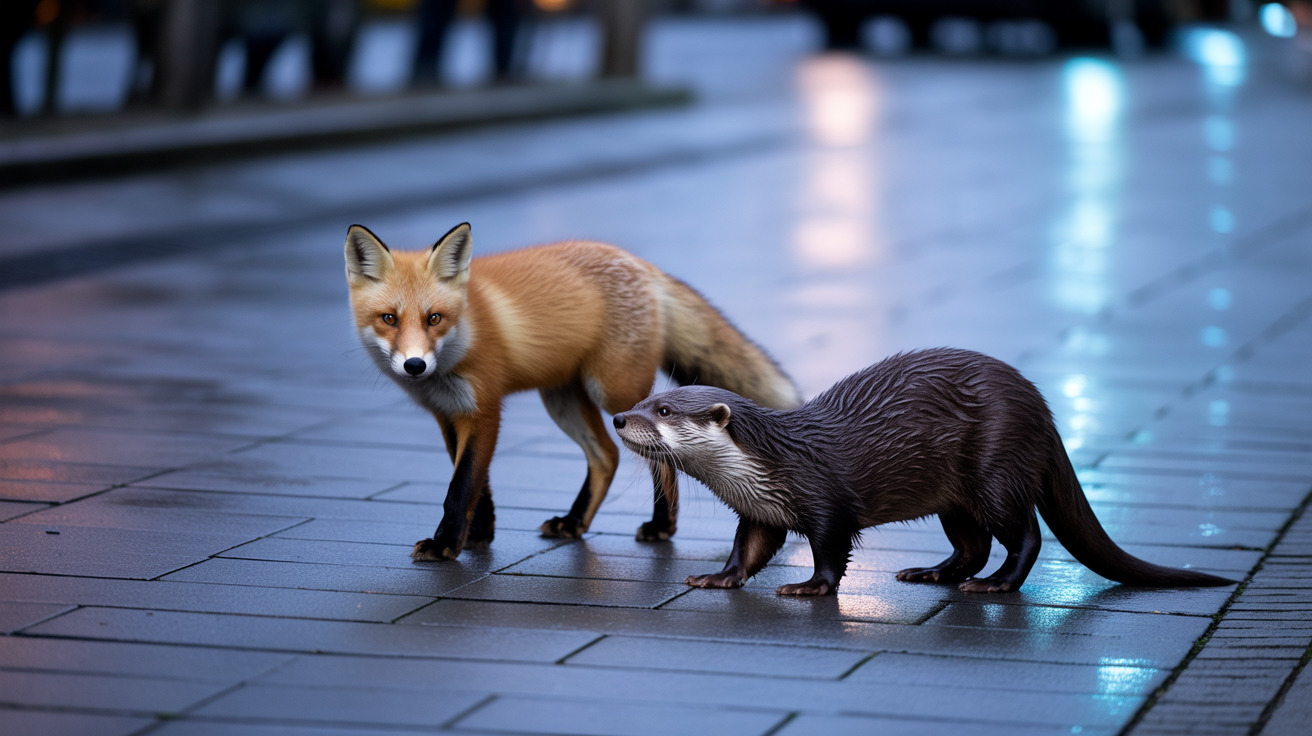
A fascinating encounter between two unlikely animal companions has captured attention and highlighted the remarkable urban wildlife adaptation occurring in cities worldwide. A fox and otter were spotted together during a late-night journey, raising important questions about conservation efforts, human development impacts, and the incredible resilience animals demonstrate when adapting to urban environments.
This extraordinary sighting of interspecies animal bonds in an urban setting provides valuable insights into how wildlife is responding to habitat changes and increasing human presence in their traditional territories. The nocturnal animal behavior displayed by this unlikely pair offers a glimpse into the complex ways animals are learning to navigate our increasingly developed world.
Urban Wildlife Adaptation in Modern Cities
The growing frequency of wild animal encounters in cities reflects a significant shift in how wildlife interacts with human environments. As natural habitats continue to shrink, many species are demonstrating remarkable adaptability by learning to thrive in urban settings. This fox and otter friendship represents just one example of how animals are finding new ways to coexist and even collaborate in environments dominated by human activity.
Urban environments present both challenges and opportunities for wildlife. While habitat fragmentation wildlife faces can disrupt traditional animal territories and food sources, cities also offer consistent food supplies, shelter options, and sometimes fewer natural predators. Many species, particularly those exhibiting flexible behavioral patterns, have successfully adapted to these new conditions.
Nocturnal Animal Behavior and Urban Survival
The late-night timing of this fox and otter encounter is particularly significant. Nocturnal carnivores have distinct advantages in urban environments, as darkness provides cover from human activity while allowing access to food sources and safe passage through developed areas. Many urban-adapted animals have shifted their activity patterns to avoid peak human hours, demonstrating remarkable behavioral flexibility.
This adaptation strategy allows wildlife to utilize urban resources while minimizing conflicts with human residents. The timing also suggests these animals have developed sophisticated understanding of human behavioral patterns, timing their movements to avoid busy periods while maximizing their chances of successful foraging and travel.
Foxes in Cities: Masters of Urban Adaptation
Urban fox behavior patterns have been extensively documented, revealing these clever carnivores as among the most successful urban adapters. Foxes demonstrate exceptional problem-solving abilities, dietary flexibility, and territorial adaptation that enables them to thrive in city environments. They've learned to navigate traffic patterns, utilize human-provided shelter, and exploit diverse food sources ranging from pet food to discarded human meals.
The presence of a fox in this unusual partnership highlights how these animals continue to display their natural social behaviors even in urban settings. Foxes are known for their intelligence and adaptability, traits that serve them well when forming unexpected relationships with other urban wildlife species.
Otter Population Recovery and Urban Expansion
Urban otter sightings have become increasingly common in many regions, often signaling positive otter population recovery trends. These semi-aquatic mammals require clean water sources and adequate fish populations, so their presence in urban waterways often indicates improving environmental conditions. However, their appearance in cities also reflects expanding populations seeking new territories as traditional habitats reach capacity.
The partnership between this otter and fox suggests that urban waterways are providing sufficient resources to support otter populations while creating opportunities for interspecies interactions that might be less common in purely wild settings.
Wildlife Conservation and Habitat Loss Implications
This remarkable sighting underscores broader wildlife conservation challenges related to habitat loss and fragmentation. As human development continues expanding into traditional wildlife territories, animals must either adapt to new conditions or face population decline. Success stories like this fox and otter friendship demonstrate that with appropriate urban planning and conservation awareness, cities can support diverse wildlife populations.
Conservation efforts increasingly focus on creating wildlife corridors, maintaining green spaces, and designing urban environments that accommodate both human needs and wildlife requirements. These approaches recognize that modern conservation must address the reality of continued human development while protecting animal populations.
Frequently Asked Questions
Can foxes and otters live together or form friendships in the wild?
While foxes and otters don't typically form partnerships in purely wild settings due to different habitat preferences and social structures, urban environments can create opportunities for unusual interspecies interactions. Both species are intelligent and adaptable, making temporary partnerships possible when resources are abundant or when navigating challenging urban terrain together provides mutual benefits.
Why are otters appearing in cities and urban areas more frequently?
Increasing urban otter sightings often result from successful conservation efforts leading to population recovery, combined with otters seeking new territories as traditional habitats reach capacity. Urban waterways with improving water quality and fish populations can attract otters, while urban environments may offer reduced competition from other predators.
How have foxes adapted to living in cities and urban environments?
Foxes have demonstrated remarkable urban adaptation through dietary flexibility, modified territorial behaviors, altered activity patterns to avoid human contact, and enhanced problem-solving abilities. They've learned to exploit urban food sources, navigate traffic safely, and utilize human structures for shelter while maintaining their natural hunting and social behaviors.
Conclusion
This extraordinary encounter between a fox and otter during their late-night urban journey represents more than just an unusual wildlife sighting. It symbolizes the remarkable animal resilience and adaptability that enables wildlife to survive and even thrive in our rapidly changing world. As urban development continues expanding, understanding and supporting these adaptations becomes increasingly important for successful wildlife conservation.
For pet owners and urban residents, such sightings remind us that we share our cities with diverse wildlife populations that deserve our respect and protection. By creating wildlife-friendly urban spaces and maintaining awareness of local animal populations, we can continue supporting the remarkable adaptability that makes encounters like this fox and otter friendship possible.




