
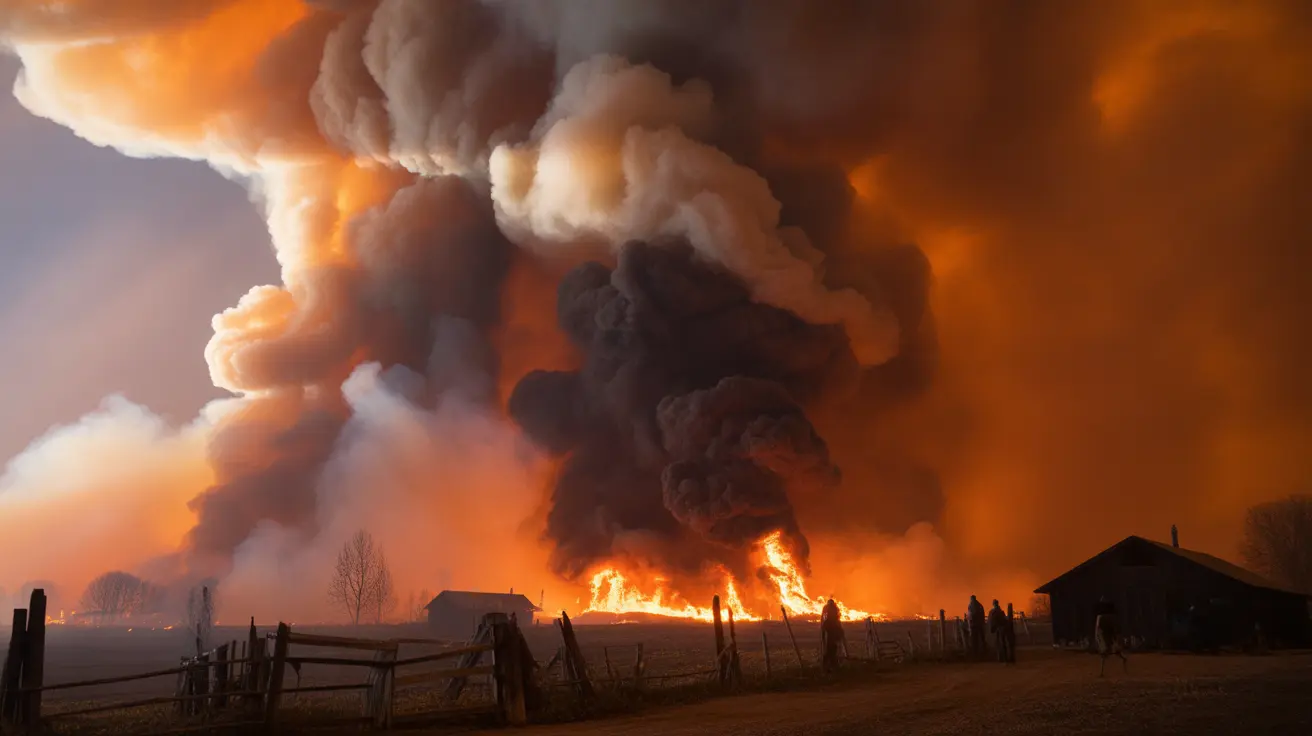
A massive fire that swept through Ciudad Juarez on Friday evening, April 3, serves as a stark reminder of the importance of farm animals fire safety for pet owners and livestock keepers. The blaze, which sent flames shooting into the sky with smoke visible for miles, completely destroyed a home and tragically killed several farm animals, underscoring the urgent need for better fire prevention measures in properties housing chickens, goats, and other livestock.
This tragic incident highlights a reality many rural and suburban pet owners face: the devastating impact that fires can have on beloved farm animals and backyard livestock. When disaster strikes, animals often cannot escape quickly enough, making prevention and preparedness absolutely critical for protecting these vulnerable creatures.
The Ciudad Juarez fire demonstrates how quickly flames can spread, leaving little time for animal rescue efforts. For families who keep chickens, goats, or other farm animals on their property, this serves as a wake-up call to evaluate current safety measures and implement comprehensive fire prevention strategies.
Understanding Fire Risks for Chickens Goats House Fire Prevention
Farm animals face unique vulnerabilities during house fires and property blazes. Unlike cats and dogs who may instinctively flee danger, chickens, goats, and other livestock often become confused or trapped during emergencies. Chickens, in particular, tend to huddle together when frightened, making evacuation extremely difficult. Goats may panic and injure themselves or others while trying to escape enclosed areas.
The risk factors for protecting livestock from fires extend beyond the animals themselves to include their housing structures, feed storage areas, and surrounding vegetation. Dry conditions, common in border regions like Ciudad Juarez, create tinderbox conditions where small sparks can rapidly develop into devastating blazes.
Electrical Fire Risks Animals Face in Rural Settings
One of the most significant threats to farm animals comes from electrical fire risks animals encounter in poorly maintained rural properties. Outdated wiring, overloaded circuits, and improper electrical installations in barns, coops, and feed storage areas create serious hazards. Heat lamps used for young animals, electric fencing systems, and aging electrical panels all pose potential ignition sources.
Regular electrical inspections become even more critical when animals are present, as their safety depends entirely on proper system maintenance. Property owners should ensure all wiring meets current safety codes and that circuit breakers function correctly to prevent electrical failures that could spark fires.
Fire Prevention Backyard Animals Strategies
Implementing comprehensive fire prevention backyard animals protocols requires both structural improvements and behavioral changes. Key strategies include maintaining clear defensible space around animal housing, removing combustible materials from near barns and coops, and ensuring proper storage of hay, feed, and bedding materials.
Creating multiple escape routes for larger animals like goats and establishing emergency evacuation plans help ensure quick response during crises. Property owners should also consider installing automatic watering systems that can help suppress small fires before they spread.
Dry Season Animal Fire Safety Measures
During dry seasons, when conditions mirror those that may have contributed to the Ciudad Juarez tragedy, extra precautions become essential. Dry season animal fire safety measures should include increased vigilance around potential ignition sources, more frequent property inspections, and enhanced coordination with local emergency services.
Maintaining green zones around animal housing through irrigation, removing dead vegetation, and avoiding activities that could create sparks during high-risk periods all contribute to safer environments for farm animals.
Safe Wiring Farm Homes and Emergency Response Planning
Professional installation of safe wiring farm homes systems should prioritize animal safety zones. This includes installing GFCI outlets in animal areas, using appropriate weatherproof electrical components, and ensuring proper grounding throughout the property.
Emergency response farm fire planning should include clear evacuation procedures, emergency contact information for veterinarians, and coordination protocols with local fire departments. Many rural fire departments appreciate advance notice about properties housing livestock, as this information helps them prepare appropriate response strategies.
Frequently Asked Questions
What should I do if a fire threatens my farm animals like chickens or goats?
Immediately evacuate animals to predetermined safe areas away from structures and combustible materials. Have halters, carriers, and containment tools readily accessible. Never risk your safety attempting animal rescue if conditions are too dangerous, and contact emergency services immediately.
How can I protect my backyard livestock from house fires in dry areas?
Maintain defensible space around animal housing, install proper electrical systems with regular inspections, store combustible materials safely away from animal areas, and create multiple evacuation routes. Consider installing sprinkler systems or other fire suppression equipment near animal housing.
Why are electrical faults a common cause of fires killing pets and farm animals?
Rural properties often have aging electrical systems that weren't designed for modern loads. Heat lamps, water heaters, and other equipment used for animal care can overload circuits. Poor wiring in barns and outdoor areas, combined with exposure to moisture and animal activity, increases failure risks significantly.
Protecting Our Most Vulnerable
The tragic loss of farm animals in the Ciudad Juarez fire reminds us that prevention remains our most powerful tool for protecting livestock and beloved backyard animals. By implementing comprehensive safety measures, maintaining electrical systems, and preparing for emergencies, we can significantly reduce the risk of similar tragedies affecting our own animals.
Every farm animal deserves protection from preventable disasters. Take time today to evaluate your property's fire safety measures and make the improvements necessary to keep your chickens, goats, and other livestock safe from harm.




