
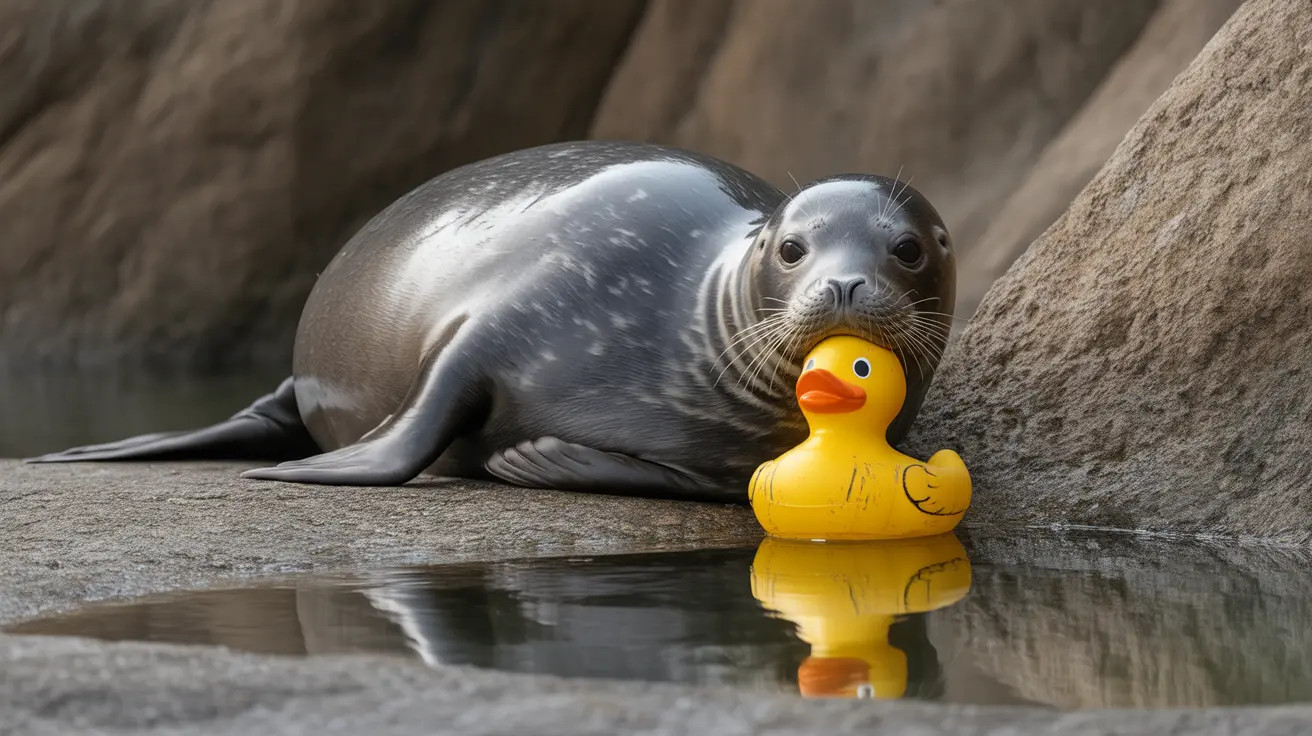
The New England Aquarium has discovered that animal enrichment through play is crucial for maintaining the physical and mental well-being of their diverse marine residents. From Atlantic harbor seals playing with rubber duckies to South American lungfish engaging with puzzle feeders, play-based enrichment has become a cornerstone of modern aquatic animal care.
This approach to marine mammal play toys and environmental enrichment aquarium programs demonstrates how simple objects can transform the daily lives of captive aquatic animals, reducing stress and promoting natural behaviors that benefit both physical health and cognitive development.
The Science Behind Play-Based Enrichment
Play-based enrichment serves multiple purposes in aquarium settings, addressing both the physical and psychological needs of marine animals. When harbor seal toys like rubber duckies are introduced to enclosures, they encourage natural hunting and manipulation behaviors that would occur in wild environments.
Research shows that environmental enrichment aquarium programs significantly reduce stereotypic behaviors—repetitive actions that indicate stress or boredom in captive animals. By providing varied stimulation through toys and interactive elements, aquarium staff can maintain higher welfare standards while supporting the animals' natural instincts.
Reggae's Rubber Ducky: A Case Study in Harbor Seal Enrichment
Harbor seal toys have evolved beyond simple balls and floating objects. The rubber ducky represents an innovative approach to sensory enrichment aquatic species programs, providing seals with objects that float, move unpredictably, and offer varied textures for manipulation.
These toys serve multiple functions: they encourage diving and swimming behaviors, provide mental stimulation through problem-solving activities, and offer opportunities for play that mirror natural foraging patterns. The cognitive benefits play animals receive from such enrichment extend far beyond mere entertainment.
Lungfish Enrichment: Beyond Traditional Fish Care
South American lungfish present unique challenges for enrichment specialists. Unlike typical aquarium fish, lungfish are highly intelligent and require complex environmental stimulation to thrive. Puzzle feeders fish programs have proven particularly effective, encouraging natural foraging behaviors while providing mental challenges.
Food-based enrichment fish programs combine nutrition with stimulation, requiring lungfish to work for their meals through specially designed feeders that mimic the complexity of finding food in natural habitats. This approach supports both physical health and psychological well-being.
Implementing Effective Toy Rotation Programs
Successful animal enrichment relies heavily on variety and unpredictability. Toy rotation animals programs ensure that marine residents don't become bored with their enrichment items. Regular rotation prevents habituation while maintaining the novelty that drives engagement and exploration.
AZA enrichment standards recommend frequent rotation of enrichment items, typically on a schedule that prevents animals from becoming too familiar with any single toy or puzzle. This approach maintains the effectiveness of enrichment programs over extended periods.
Benefits for Stereotypic Behaviors Reduction
One of the most significant advantages of comprehensive enrichment programs is their ability to reduce problematic repetitive behaviors. Stereotypic behaviors reduction occurs when animals have sufficient mental and physical stimulation to occupy their time and energy in positive ways.
Aquarium animal welfare standards now recognize enrichment as essential rather than optional, with play-based programs showing measurable improvements in animal behavior and overall health indicators.
Frequently Asked Questions
How can I use toys like rubber duckies for enrichment with my pet seal or fish?
While most pet owners don't have seals, the principles apply to aquarium fish. Choose toys appropriate for your pet's size and species, ensure they're made from safe, non-toxic materials, and rotate them regularly to maintain interest. Always supervise initial introductions to new enrichment items.
Why is play-based enrichment important for reducing stress in aquarium animals like harbor seals and lungfish?
Play-based enrichment provides mental stimulation and physical activity that mirror natural behaviors. This engagement reduces boredom and stress while promoting psychological well-being. Animals that receive adequate enrichment show fewer signs of anxiety and display more natural behavior patterns.
What are the benefits of rotating toys daily to prevent boredom in captive aquatic pets?
Regular toy rotation maintains novelty and prevents habituation, ensuring that enrichment items continue to provide mental stimulation. This practice encourages continued exploration and engagement while supporting the cognitive health of aquatic animals.
Conclusion
The success of programs like Reggae's rubber ducky demonstrates that thoughtful animal enrichment can significantly improve the quality of life for captive aquatic species. From harbor seals to lungfish, each species benefits from carefully designed enrichment programs that address their unique behavioral and cognitive needs.
These practices at the New England Aquarium serve as models for aquarium animal welfare worldwide, showing that simple innovations in play-based enrichment can yield profound benefits for marine animal care and conservation efforts.




